Start Small, Win Big: How to Build a Tech-Heavy US Portfolio with Any Budget
Updated: 5 Jun 2026
Written byAlevin K Chan
Freelance Contributor

The US stock market has been on an impressive bull run, delivering double-digit returns over the past two years – 23.31% in 2025 and 16.36% in 2026. These were some of the S&P 500’s best years in the period between 2017 and 2026.
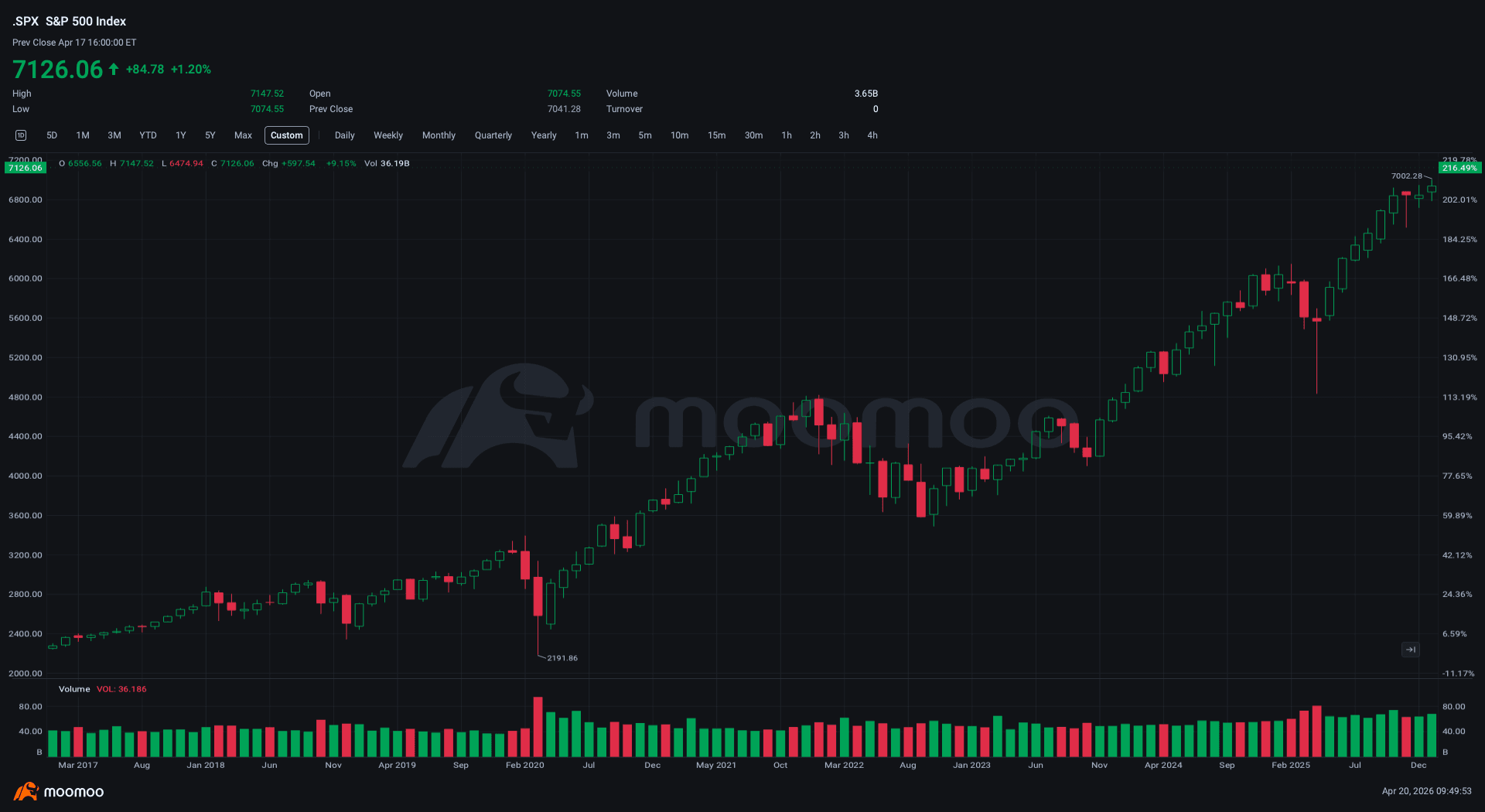
But zoom in onto the US tech sector and the numbers become even more impressive. From 2023 to 2025, the Nasdaq 100 – the main benchmark for US tech stocks – produced yearly returns of 53.81%, 24.88% and 20.17% respectively.
Clearly, the US technology sector is the major driver of the current stock market bull run. Given that bull cycles last an average of 51 months, this means that could just be in the middle of the bull cycle – with potentially more upside still to come.
But hang on. After consecutive years of double-digit growth, share prices of US tech stocks have spiked up, making them seem like an expensive buy. Does that mean you should sit out the current bull cycle and lose out on potentially massive gains in the process?
Hmm, is there a way you can start investing in the hottest US tech stocks right now that does not require you to put down a large budget? Yes, and there are several ways you can do so with Moomoo SG.
What’s behind the latest stock market bull run?
In two words: Artificial Intelligence.
Specifically, it’s the tech companies driving the generative AI boom that are seeing some of the greatest stock price gains in recent history. Further adding fuel to the boom is the pedigree of the companies involved – household names such as Nvidia, Microsoft, Amazon and Google.
When familiar tech giants of our times are filling headlines with mind-boggling announcements investing billions of dollars in AI development, it presents a compelling call to investors – get on board, or risk missing out on the next big revolution orders of magnitude bigger than anything that’s come before.
On the flip side, some see the fast pace and extreme enthusiasm accompanying the current AI boom as cause for concern, fearing a repeat of the dot-com bubble that took place as we entered the new millennium.
This worry isn't unwarranted – in fact, some skepticism is healthy, considering that AI is really only in its infancy. Still, it's worth bearing in mind that the current wave of valuations is being led by proven companies with healthy financials, a much more dependable scenario than the frenzy of public offerings seen in the dot-com crash.
So, the takeaway? Driven by tech giants, the rise of AI presents an enticing opportunity. But with things moving as fast as they are, a cautious approach is warranted.
Slow and steady is the name of the game. Starting small, diversifying smartly and investing consistently help investors participate in long-term US tech stock growth.
Three ways to build a US tech-heavy stock portfolio
1: Start with fractional shares
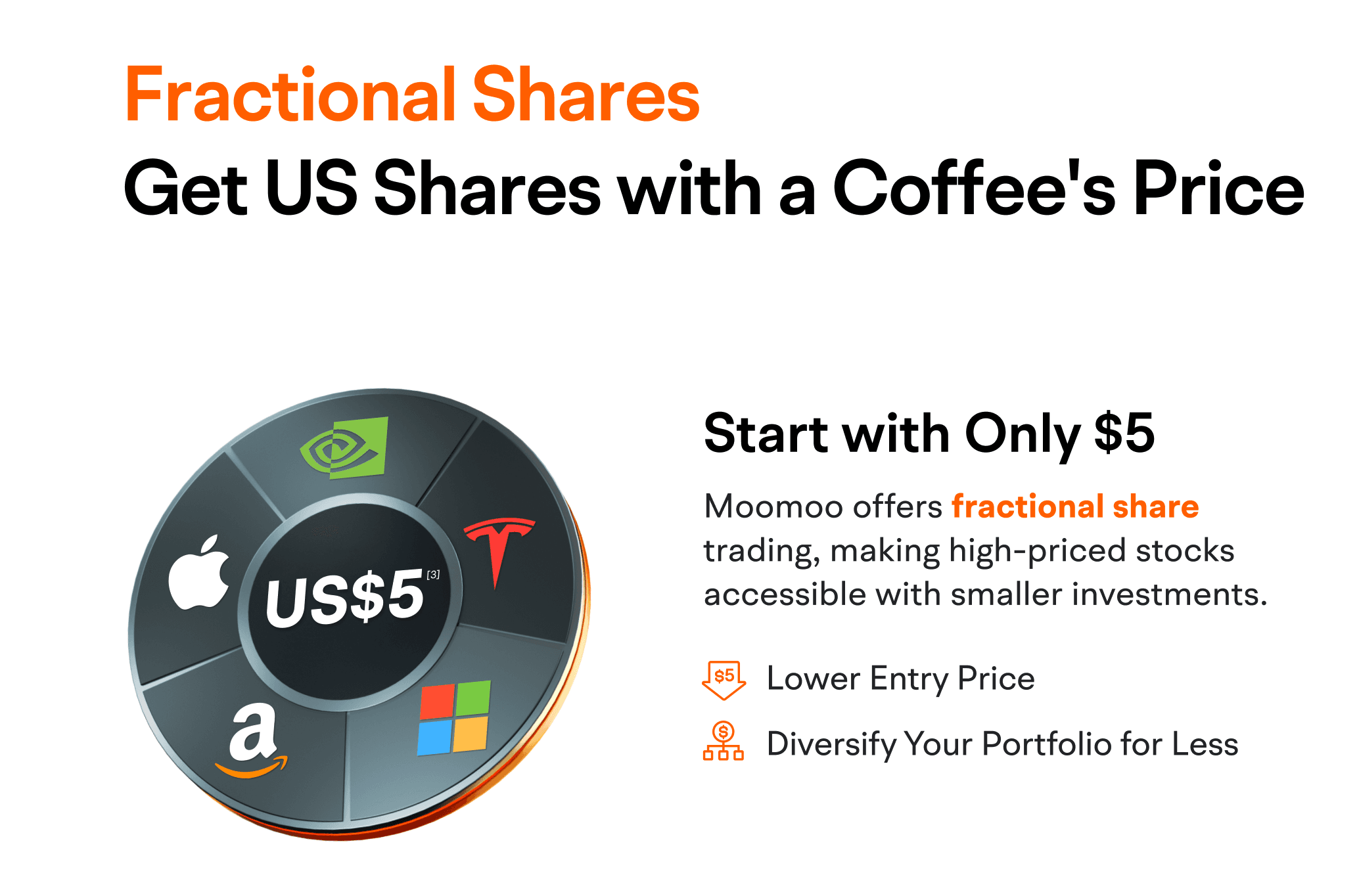
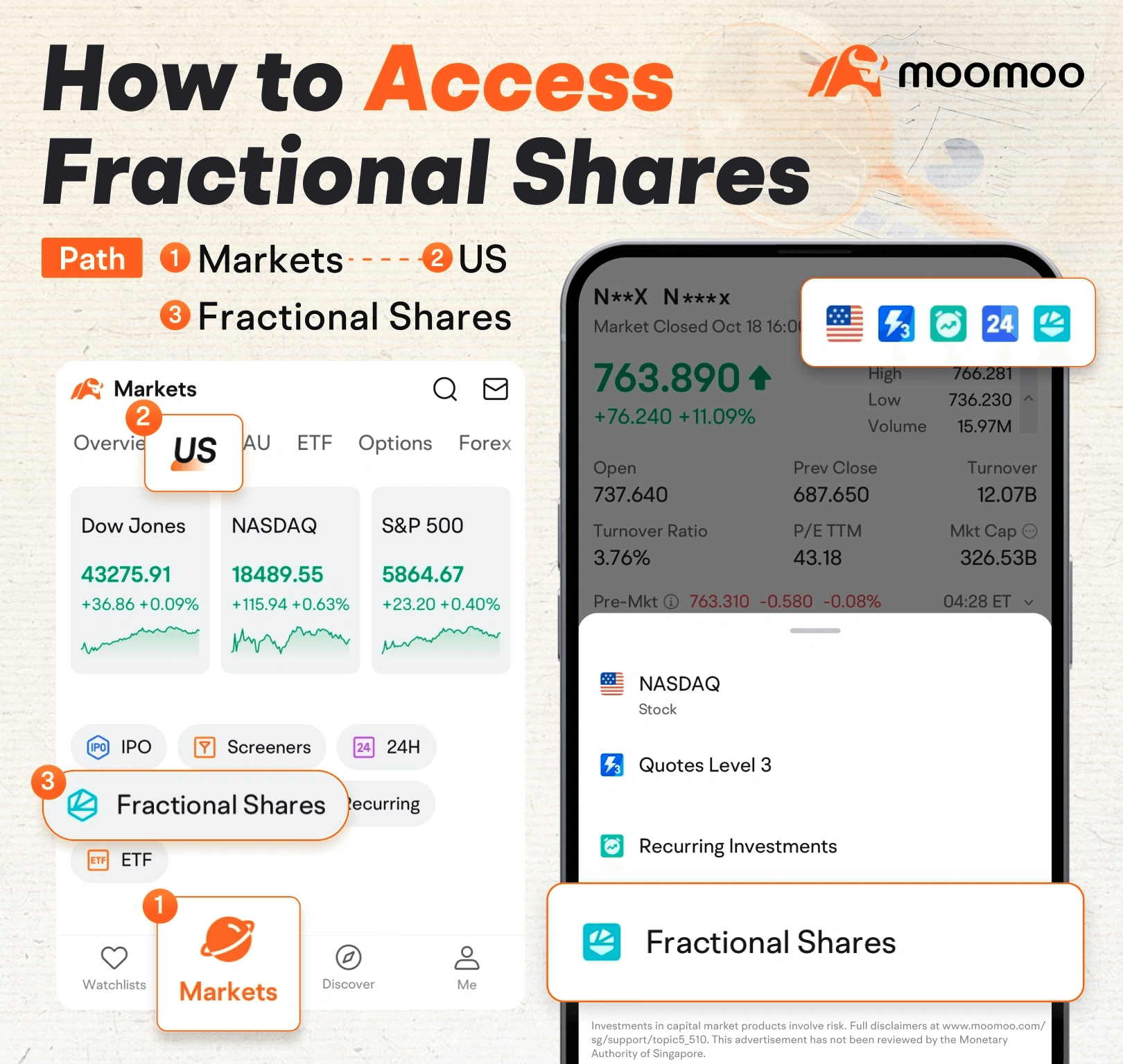
Fractional shares are a way to invest in the companies you want without having to pay their full stock prices. Instead of purchasing a whole share – which can cost upwards of several hundred dollars per share – you can instead, purchase a portion of the share with a budget that you set.
A fractional share allows you to gain exposure to the price action of the stock – if the share price changes by 10%, so will the value of your fractional share. This allows you to participate in the potential upside of leading US tech stocks at just a fraction of the cost.
Pro-tip: Moomoo SG offers fractional shares from as little as US$5 each! This means that you can own, say, the Magnificent Seven (Alphabet, Amazon, Apple, Meta, Microsoft, Nvidia, and Tesla) from as low as US$35 (US$5 per fractional share x 7). Sign up now!
Note that short-selling is not supported for fractional shares.
2: Build exposure with selected ETFs
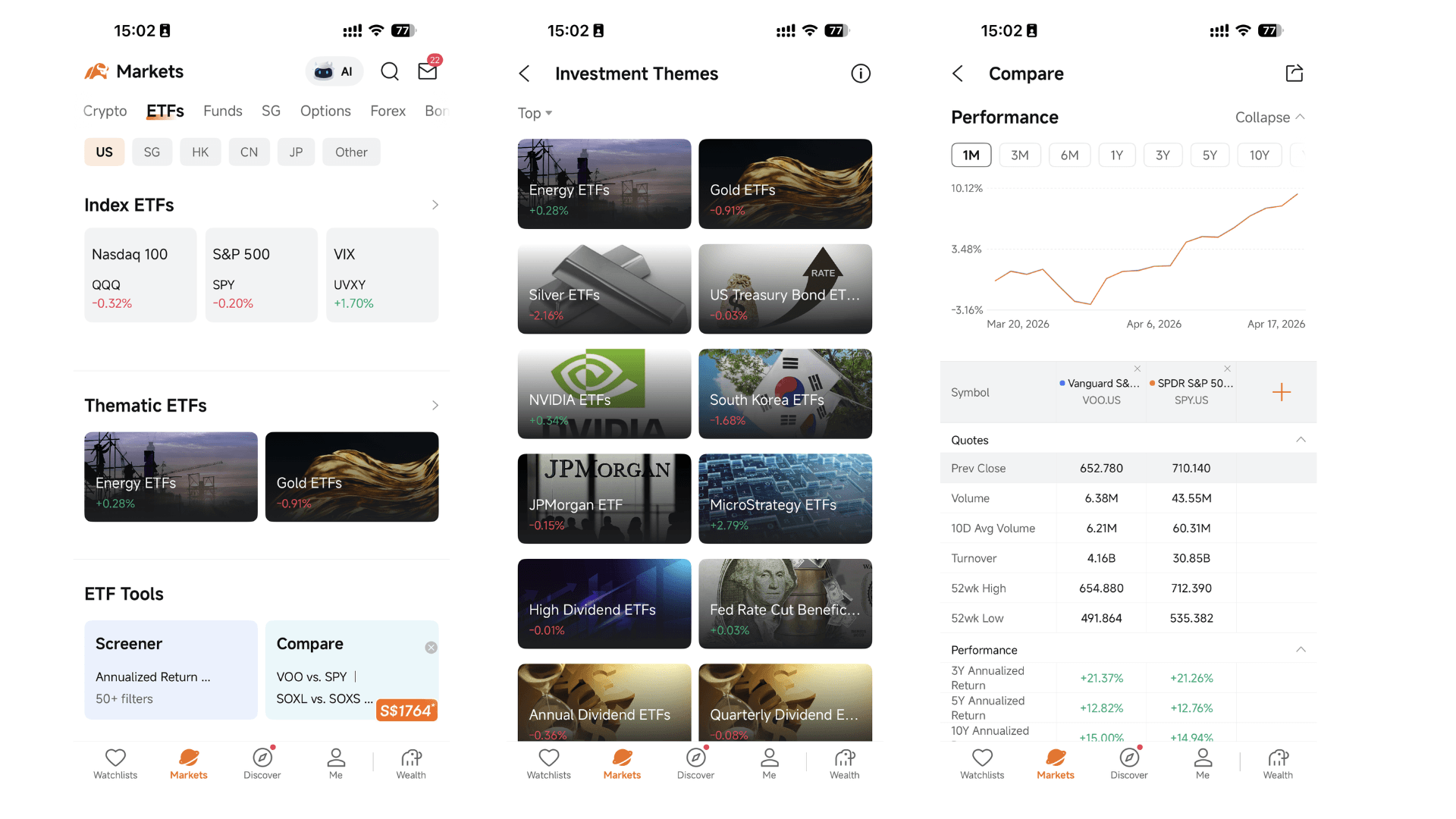
Exchange-traded Funds (ETFs) are investment funds that can be freely traded on the stock exchange. They represent a basket of shares, categorized across different themes, and are regularly rebalanced to ensure the fund continues to fit its investment objectives.
ETFs are highly popular among investors as they offer a convenient way to add a collection of different stocks to your portfolio. An ETF also costs less to purchase, compared to purchasing all the different stocks represented by the ETF separately.
You can choose ETFs according to different characteristics such as company size, region, and yes – sectors. For example, one way to trade leading US tech stocks is with an ETF that tracks the performance of the Nasdaq 100 index. More narrowly focused ETFs such as ones that track chipmakers, or data centres offer finer degrees of diversification while maintaining the US tech/AI theme in your portfolio.
Pro-tip: Enjoy zero commission* when trading US-listed ETFs with Moomoo SG. Choose from a wide range of popular US tech and AI ETFs to personalise your portfolio. (*T&Cs and other fees apply.) Sign up now!
3: Tame volatility with Dollar-cost Averaging (DCA)
Love investing but hate volatility? The key to managing market volatility is with Dollar-cost Averaging (DCA). In essence, you simply invest a fixed amount at fixed intervals (eg daily, weekly or monthly) , no matter whether the market is going up, down or sideways.
This method means you will buy more shares when prices are low and less shares when prices are high. Over time, the cost basis of your investment is averaged out – with no guesswork, and no changes in your investment budget from month to month.
And the best part is, the effects of market volatility is mitigated over time, allowing you to effectively ignore short-term fluctuations.
Besides having a system to manage volatility, investing also requires consistency. And among the best ways to stay consistent is with a Moomoo SG Regular Savings Plan (RSP).
Moomoo SG RSP automates your investment every month with no further action from you, making it the most reliable way to execute your DCA strategy. Simply choose how much you want to invest each period and RSP will do the rest.
Pro-tip: Besides convenience, Moomoo SG RSP also offers great value especially for US-focused investors. Remember how we said Moomoo SG offers zero commissions when trading US-listed stocks and ETFs? Yeah that applies when you invest via RSP too.
You can start your Moomoo SG RSP from just US$5 per month. Want to change your investment frequency or invest a different amount each time? Simply choose the frequency and budget you want.
A one-time setup is all that’s needed. Just link your bank account for automatic transfer and currency conversion and sit back and watch your US tech stock portfolio grow in time. Sign up now!

Moomoo SG, start small, grow steadily
The US tech stock boom is entering its third year, and chances are good that this current bull cycle still has a way to go. Don’t let this opportunity pass you because of a lack of budget, a fear of short-term market volatility, or because you feel the tech stock prices have gotten too high.
With Moomoo SG , you can set up an RSP customised to your own investment budget, frequency and portfolio mix. This way, you can take part in the tech and AI stock boom while building your investment at your own pace, leading to potential long-term returns.
Try moomoo today!
Disclaimer:
Moomoo Singapore is the sponsor of this content. This content is for informational purposes only, does not constitute financial advice, and reflects SingSaver's independent opinion. Please conduct your own research and invest according to your personal risk tolerance. This advertisement has not been reviewed by the Monetary Authority of Singapore.
About the author
Alevin K Chan
Alevin loves helping people make good money decisions. He briefly flirted with being a Financial Advisor, but quickly realised writing about personal finance is the better way to go.