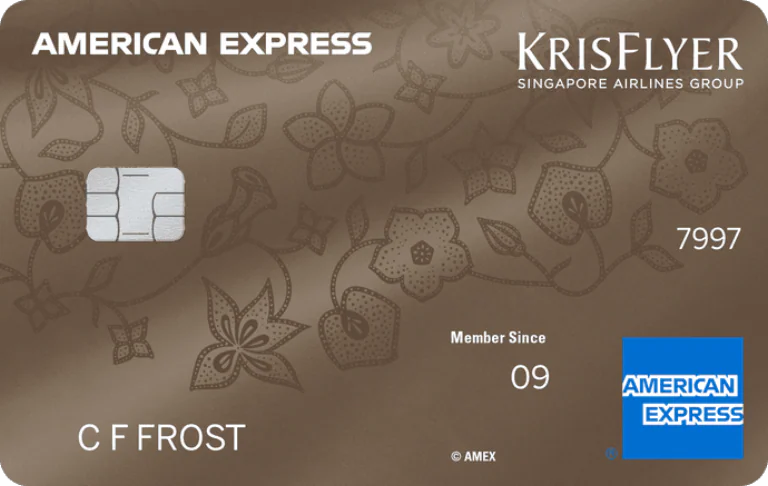
American Express Singapore Airlines KrisFlyer Ascend Credit Card
S$397.85
Updated: 21 May 2026

The Milelion
If you’re an avid miles collector, I hope you know by now that your free ticket isn’t really free.
What I mean is that even though your airline miles cover the fare component, you’re still required to pay the airport taxes in cash. This currently amounts to ~S$65 for a flight out of Changi Airport, with additional taxes payable on the return journey, or if you’re transiting en route to your final destination.
However, the cash component can sometimes be much more significant, if the airline imposes fuel surcharges. With oil prices spiking due to the ongoing Middle East crisis, these pesky fees have come to the forefront once again.
In a worst-case scenario, fuel surcharges can add hundreds of dollars to your “free” ticket, so how do they work, and is there any way to avoid them?
Fuel surcharges, often labelled as “YQ” or “YR” charges in a ticket breakdown, are extra fees that airlines impose on top of the base airfare.
Despite the name, they’re no longer strictly tied to fuel costs (which is why they’re progressively referred to as carrier-imposed surcharges nowadays). Fuel surcharges were originally introduced when oil prices spiked, as a way for airlines to quickly recover rising fuel costs without constantly refiling fares (which can be a technically cumbersome process). Today, however, they function more like a flexible pricing component which is set entirely at the airline’s discretion.
The most common criticism of fuel surcharges is that they rarely drop as fast (or as far) as global oil prices. When oil prices plummet, many airlines maintain high surcharges, leading to accusations that the "fuel surcharge" is simply a hidden profit margin rather than a cost-recovery mechanism.
Moreover, fuel surcharges disproportionately affect award tickets. With commercial tickets, the requirement to display all-inclusive pricing may cause an airline to adjust its fares slightly to keep the overall price competitive. For example, a S$100 fuel surcharge might be offset by a S$20 decrease in airfare, resulting in the burden being shared 80-20 by company and consumer.
But with award tickets, these must be paid entirely in cash. Here’s an example of a fuel surcharge on a Singapore to Frankfurt Economy Class ticket with Lufthansa. Note how the YQ and YR components sum up to nearly S$650, which is more than half of the fare itself!
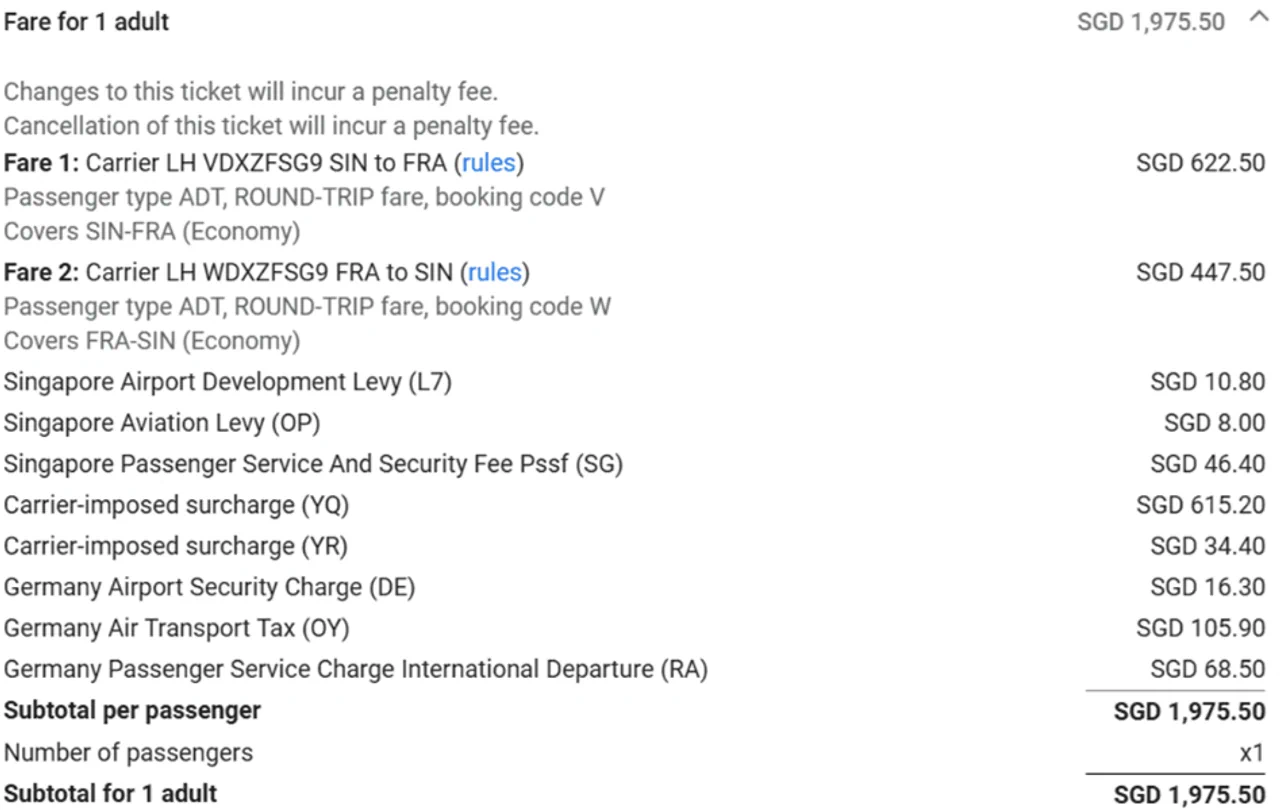
To put it another way, if you were to redeem this ticket with miles, you would need to pay S$905.50 in cash (S$650 of fuel surcharges + S$255.50 of taxes). That’s a lot to pay for a “free” ticket, and is almost as expensive as a discounted Economy fare!
Be the first eligible applicant at 3PM and 9PM to apply for Citi Credit Cards to score a reward upgrade to the latest smartphone worth over S$1,800! Valid till 11 October 2026. T&Cs apply.
Apply for a Citi PremierMiles Card via SingSaver and score S$400 Cash via PayNow, S$420 Shopee Voucher, 25,000 Max Miles by HeyMax, Dyson Airstrait™ straightener, or Dyson V8 Cyclone Vacuum Cleaner upon activating and spending a minimum of S$500 within 30 days of card approval. Valid till 11 October 2026. T&Cs apply.
You can also top up from just S$100 to upgrade to the latest Dyson and Apple products, including the latest MacBook Neo 256GB Magic Keyboard. Valid till 11 October 2026. T&Cs apply.
Let’s start with the good news. Singapore Airlines removed fuel surcharges in March 2017, so KrisFlyer members only have to pay the standard airport taxes on award redemptions.
Of course, there’s no guarantee this will last. If oil prices remain elevated, fuel surcharges could very well make a return.
Hopefully it doesn’t come to that, because recent developments at Cathay Pacific show how painful they can be. Since March 2026, Cathay Pacific has nearly tripled its fuel surcharges
A round-trip ticket from Singapore to Hong Kong now has US$100 of fuel surcharges, compared to US$36 before the Iran conflict
A round-trip ticket from Singapore to San Francisco now has US$500 of fuel surcharges, compared to US$182 before the Iran conflict
These added costs can significantly erode the value of otherwise attractive redemption sweet spots. For example, a round-trip Economy Class ticket to Hong Kong costs 18,000 Asia Miles, compared to 31,000 KrisFlyer miles. However, the cash payment on the Asia Miles ticket is S$250, more than double the S$123 on the KrisFlyer ticket.
It’s also worth noting that while Singapore Airlines does not impose fuel surcharges, many of its Star Alliance partners do. If you redeem KrisFlyer miles for partner awards, you’ll still have to pay these additional charges.
Fortunately, there are a couple of ways of avoiding fuel surcharges.
Certain frequent flyer programmes absorb fuel surcharges on all redemptions, meaning that members simply pay the standard airport taxes.
|
Frequent Flyer Programme |
Transfer options |
|
Air Canada Aeroplan |
|
|
Alaska Airlines Atmos Rewards |
|
|
American Airlines AAdvantage |
|
|
Avianca Lifemiles |
|
|
United Airlines MileagePlus |
|
Unfortunately, only a limited number of these programmes are available through credit card points transfers, and even then, at inferior conversion ratios (e.g. OCBC$ convert to KrisFlyer miles at 2.5 points = 1 mile, versus 3.57 points = 1 mile for United MileagePlus).
And while HeyMax Max Miles can be converted to all of the above programmes at a 1:1 ratio, it’s usually a better idea to conserve them for hotel points transfer instead, since some hotel points currencies can be more valuable than airline miles on a per unit basis.
While Qatar Privilege Club normally passes on fuel surcharges on award redemptions, there is an exception for Cathay Pacific.
Here’s an example of a Singapore to Hong Kong Business Class award, which costs 27,000 Asia Miles & HKD 790 (S$128) when booked through Asia Miles, and 22,000 Avios & S$65 when booked through Qatar Privilege Club.
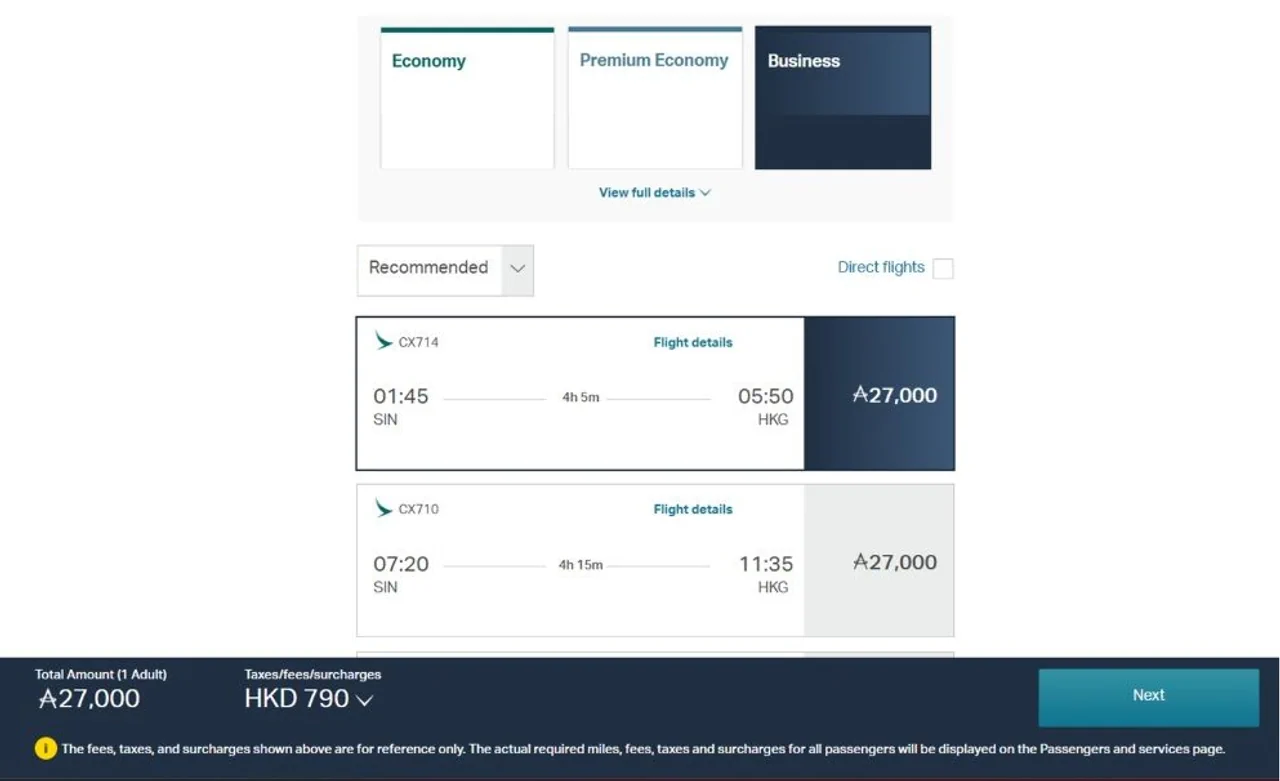
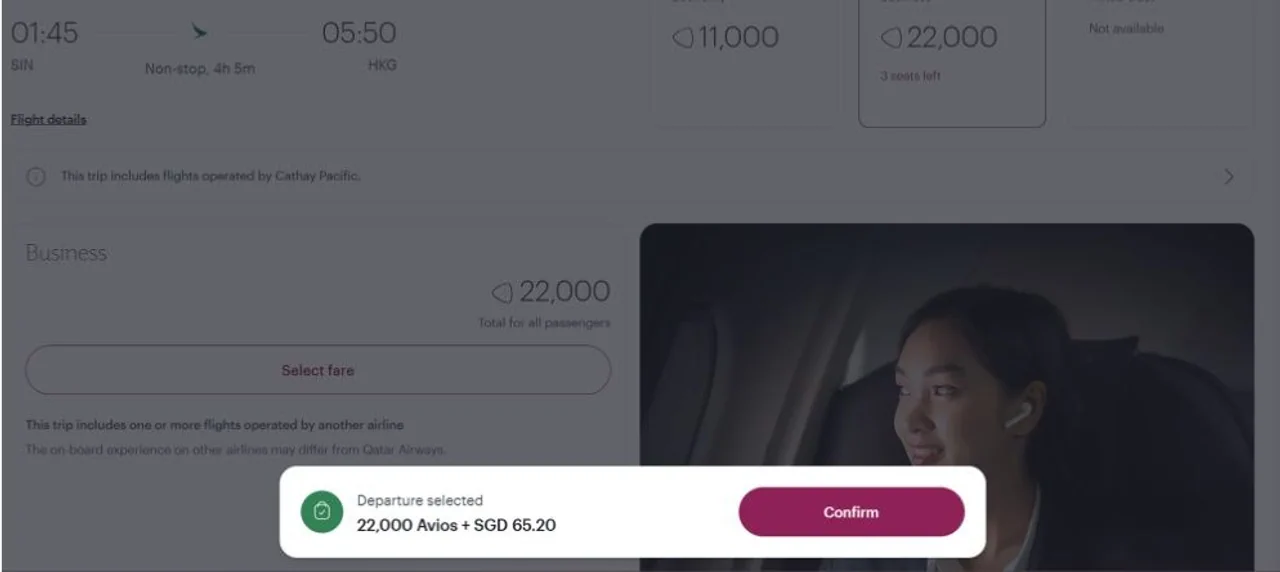
The difference between the two cash payment amounts is the US$50 (S$63) of fuel surcharges that you avoid when booking through Qatar Privilege Club.
It’s worth noting that certain countries restrict or regulate the fuel surcharges that airlines can levy. By repositioning yourself, you could potentially save on fuel surcharges (though those savings would of course be offset by the cost of the repositioning flight).
For example, Brazil bans fuel surcharges outright, which is why the cash payment on a Sao Paulo to London Business Class flight on British Airways - otherwise notorious for fuel surcharges - is so modest.
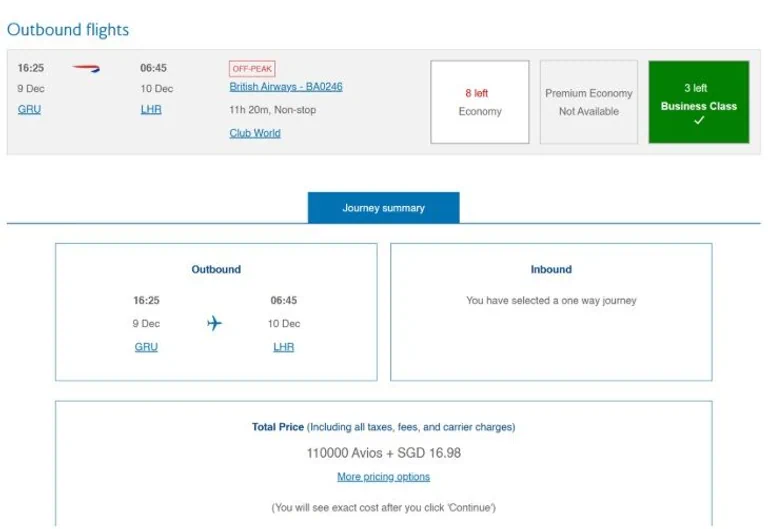
Of course, I don’t think someone in Singapore would consider it worthwhile repositioning themselves to South America just to save on fuel surcharges! However, if you’re planning to travel to South America anyway, then using Brazil as your gateway could result in savings.
Even if a programme does not impose fuel surcharges, you might still find yourself on the hook for other types of redemption fees.
For example, Qatar Airways Privilege Club has a “redemption surcharge” that ranges from US$90 to US$125 for Economy Class flights and US$180 to US$250 for Business Class flights between Singapore and Europe and the USA. This is a fee for redeeming your miles, plain and simple.
Fuel surcharges, to me, are the epitome of “junk fees”. After all, you wouldn’t go to a restaurant expecting to pay an “ingredients surcharge”. Why should this be any different?
Sadly though, it doesn’t look like they’re going anywhere soon, especially with the elevated oil prices caused by the ongoing Middle East conflict. That’s why it’s more important than ever to understand which programmes pass them on, and which don’t, so you can minimise the cash component of your next award redemption.

Aaron founded The Milelion to teach people how to travel better for less, with credit cards, airline and hotel loyalty programmes. With 500,000 miles flown and counting, he’s keen to debunk the myth that you can’t travel in style without breaking the bank.