How to Stack a Capped Reno Loan with a Low-EIR Personal Loan for Non-Structural Home Fittings
Updated: 6 Aug 2026

Written bySingSaver Team
Team

Collecting the keys to your new BTO flat or resale property is one of the biggest milestones in adult life. But once the initial excitement settles, the reality of turning a bare concrete structure into a livable home sets in.
While most homeowners turn to dedicated bank renovation loans to cover their interior works, many are caught off guard by a strict regulatory wall: Singapore renovation loans are capped at S$30,000 (or 6 times your monthly salary, whichever is lower) and can strictly be used only for permanent, structural alterations.
When non-structural fittings—such as track lights, digital locks, water purifiers, window grilles, and custom curtains—begin piling up on top of standalone household appliances, the unfunded deficit can easily reach S$10,000 to S$20,000.
If you want to complete your home without wiping out your emergency cash reserves or resorting to high-interest credit cards, here is how to strategically stack a capped renovation loan with a low-EIR (Effective Interest Rate) personal loan.
SingSaver x HSBC Personal Loan Exclusive Offer
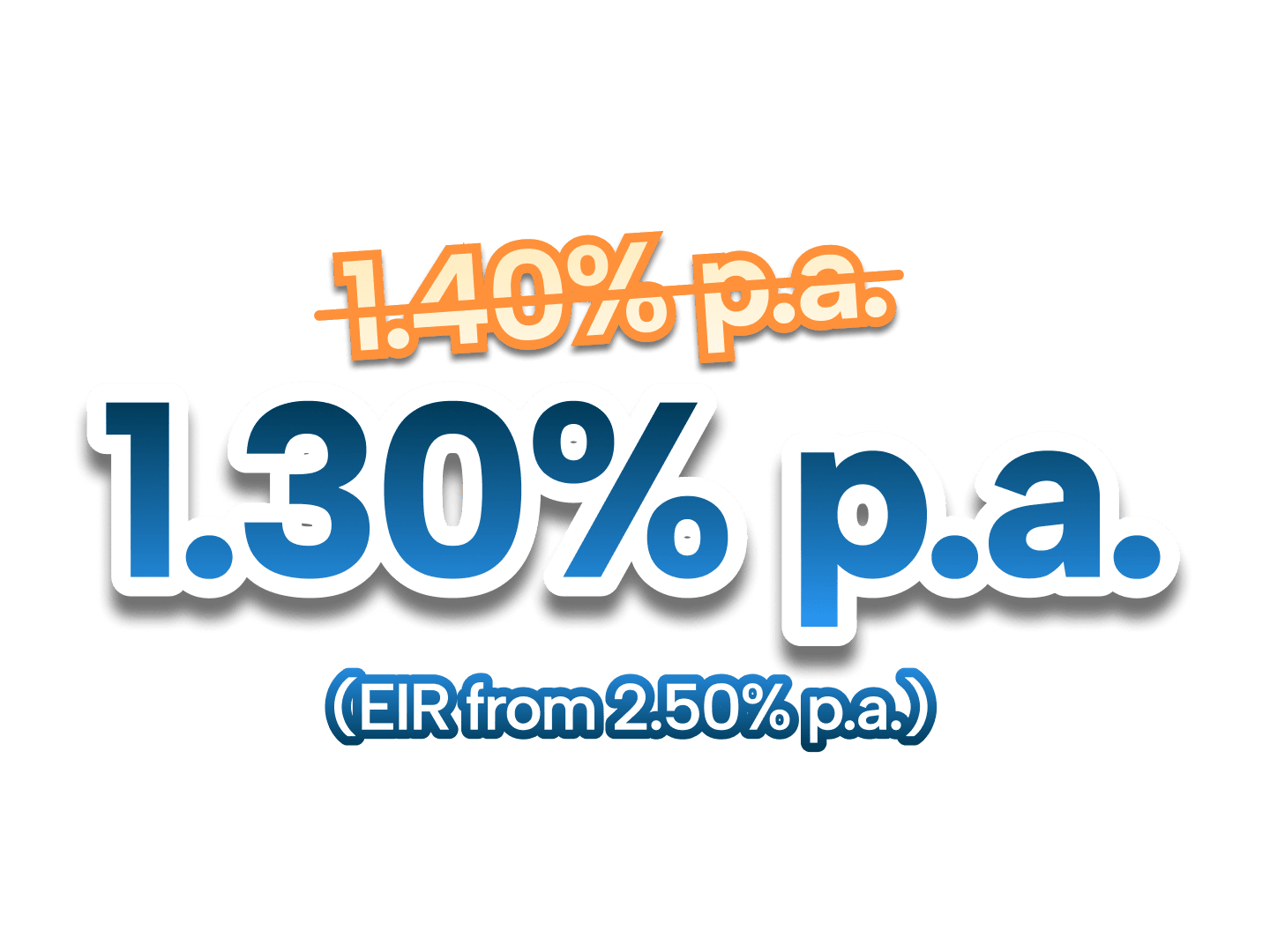
Enjoy attractive interest rates from 1.30% p.a. (EIR from 2.50% p.a.) when you apply for HSBC Personal Loan via SingSaver. Available to new and existing customers! Valid till 30 September 2026. T&Cs apply.
1. Structural vs. Non-Structural: Where the Line Falls
Under MAS regulations, banks disburse renovation loan funds directly to your interior design (ID) firm or contractor via Cashier's Order. Banks routinely require itemised quotations, and some conduct site audits before releasing funds. If an item isn't permanently built into the physical structure of the flat, it generally cannot be billed under a standard renovation loan.
Reno Loan vs Personal Loan Eligibility
| Category | Reno Loan Eligible? | Personal Loan Eligible? | Typical Examples |
|---|---|---|---|
| Structural & Built-in Works | Yes | Yes | Tiling, flooring, hacking, built-in wardrobes, kitchen carpentry, electrical rewiring, plumbing |
| Non-Structural Fittings | No | Yes | Track lights, digital door locks, water purifiers, window grilles, track curtains, ceiling fans, smart switches |
| Loose Furnishings & Appliances | No | Yes | Sofas, dining sets, mattresses, refrigerators, washing machines, TVs, robot vacuums |
Non-structural fittings, though installed into your walls or ceilings, are legally classified as removable fixtures. Bundling these into your ID contractor's quote for a renovation loan can result in the bank rejecting line items or reducing your approved loan quantum.
Renovation Loans (Phase 1 — structural works)
DBS offers a Renovation Loan at 4.18% per annum, with a Green/Eco-aware version at a lower rate for borrowers meeting sustainability criteria. Separately, the DBS Eco-aware Renovation Loan offers interest rates as low as 5.68% p.a. (EIR 6.40% p.a.) for borrowers who fulfil at least six items on a 10-point eco-aware checklist, alongside a 1% processing fee and 1% insurance premium.
Maybank's renovation loan can go as low as 2.88% per annum for borrowers who also hold a Maybank home loan mortgage.
As of early May 2026, POSB's promotional rate was 3.38% p.a. (EIR 4.49%), though restricted to existing POSB/DBS HDB Home Loan customers.
Across DBS, OCBC, Maybank, and POSB, renovation loans are typically capped at S$30,000 or six times monthly income, whichever is lower, and are subject to a 55% TDSR limit. If your costs exceed this, you can take a second renovation loan from a different bank to raise your total available funds to S$60,000, since each bank's loan is capped individually at S$30,000 — worth flagging as an alternative to the personal-loan stack in the article, if relevant.
Personal Loans (Phase 2 — non-structural fittings, appliances, furnishings)
For the "low-EIR" leg of the stack:
- DBS Personal Loan — rates from 1.48% p.a., with EIR from 3.22% p.a., plus a 1% processing fee; borrowers can access up to 4x monthly salary if earning under S$120,000/year, or up to 10x if earning above that.
- UOB Personal Loan — advertised from 1.00% p.a. with EIR from 1.93% p.a., with instant approval and disbursement for applications submitted within the day.
- SingSaver Exclusive/Instant Loan — rates from 1.56% p.a. (EIR 3.00% p.a.) with no processing or hidden fees, and flexible tenures of 3 to 60 months.
- Alternative/non-bank option — a non-bank personal loan listed on SingSaver carries an EIR of 9.88% p.a. with a S$1,000 processing fee, useful as a comparison point for why bank loans are usually the cheaper stacking leg.
General market context: licensed moneylenders can charge no more than 4% a month in interest, and loan amounts typically range from about S$1,000 up to six times monthly income, which is why the article's guidance steers toward bank personal loans over moneylenders for the "low-EIR" leg.
2. Why the S$30,000 Cap Falls Short
Rising labour, material, and shipping costs mean even basic built-in works for a 4-room BTO frequently consume the entire S$30,000 allocation — leaving nothing for handover essentials. Resale flats requiring extensive hacking and rewiring can see structural costs alone cross S$50,000.
Illustrative Handover Outlay Breakdown, 4-Room BTO
(worked example, not a universal benchmark — actual costs vary by unit and contractor)
| Cost Category | Amount (S$) | Reno Loan Eligible? |
|---|---|---|
| Built-in carpentry, wet works & flooring | 28,000 | Yes |
| Non-structural fittings & smart fixtures | 9,000 | No |
| Essential appliances & loose furniture | 12,000 | No |
| Total handover outlay | 49,000 | — |
| Maximum renovation loan coverage | (30,000) | — |
| Unfunded handover deficit | 19,000 | — |
To bridge this gap without liquidating savings or paying 25–28% p.a. credit card interest, a structured low-EIR personal loan is the most cost-efficient tool.
Before You Compare
Get separated quotations
ask your ID firm to split built-in works from non-structural supply items into two distinct invoices
Confirm your monthly income
Income under S$5,000/month reduces your quantum below S$30,000
Check minimum income requirements
reno loans and personal loans have separate eligibility bars
3. The Stacking Framework, Step-by-Step
Stacking loans means combining two distinct borrowing facilities into a single financial roadmap.
Phase 1: Maximise the Low Flat Rate of the Reno Loan
Cover 100% of hard built-in costs (tiling, wet works, masonry, kitchen carpentry). Renovation loans carry lower nominal rates and disburse straight to your contractor — no cash handling on your end.
Phase 2: Layer a Low-EIR Personal Loan for the Rest
Cover non-structural fittings, appliances, and soft furnishings. Personal loans disburse as cash directly to your account — no site audits, no invoice checks, full freedom on where you spend it.
4. Calculating Your Total Debt Servicing Ratio (TDSR)
Before applying for both loans, confirm your combined debt stays within MAS's Total Debt Servicing Ratio framework: total monthly debt repayments across all loans must not exceed 55% of your gross monthly income.
Formula: TDSR = Total Monthly Debt Repayments ÷ Gross Monthly Income ≤ 55%
Worked TDSR Example
| Step | Calculation | Result |
|---|---|---|
| 1. Monthly income cap (55%) | S$10,000 x 55% | S$5,500 |
| 2. Existing fixed debts | S$2,800 mortgage + S$700 car loan | S$3,500 |
| 3. Remaining debt margin | S$5,500 − S$3,500 | S$2,000/month |
| 4. Combined new loan instalments | Reno loan + personal loan | S$1,200/month |
| Result | S$1,200 vs S$2,000 available | Within threshold |
What to Do Based on Your Numbers:
5. Execution Roadmap for Homeowners
- Finalise ID Quote — ask your interior designer to separate built-in works from non-structural supply items into two distinct quotes.
- Apply for the Renovation Loan First — secure your primary lower-rate tier against your contractor's main scope of work.
- Apply for the Low-EIR Personal Loan Second — once the reno loan is approved, submit your personal loan application via Singpass/MyInfo for rapid cash disbursement.
- Align Loan Tenures — match both facilities to the same tenure (e.g., 3 or 5 years) so repayment obligations stay consistent throughout.
Disclaimer: The information on this page is for general educational and informational purposes only and should not be considered financial or investment advice.
About the author

SingSaver Team
At SingSaver, we make personal finance accessible with easy to understand personal finance reads, tools and money hacks that simplify all of life’s financial decisions for you.
The information on this page is for educational and informational purposes only and should not be considered financial or investment advice. While we review and compare financial products to help you find the best options, we do not provide personalised recommendations or investment advisory services. Always do your own research or consult a licensed financial professional before making any financial decisions.