Best Credit Cards for Overseas Spending on Your December Holiday
Updated: 18 Nov 2026

Written byAfina Najib
Senior Content Editor - Singapore
⚡ Quick Answer
| Product Name | Cashback Overseas | Annual Fee |
|---|---|---|
- | S$196.20 | |
| 1.37 % | S$261.60 |

Disclaimer: The information on this page is for general educational and informational purposes only and should not be considered financial or investment advice.
The short answer: which card should you take overseas this December?
December is peak travel season for Singaporeans, whether it’s a Christmas market in Europe, a ski trip to Japan or a long weekend in Bangkok. Holiday spending adds up quickly, and most credit cards quietly add a foreign currency (FCY) transaction fee of around 3.25% to every overseas purchase.
The right card can turn that cost into miles or cashback. The wrong one leaves you paying extra for every meal and souvenir.
Best credit cards for overseas spending compared
Product | Overseas earn rate | Min. spend | FCY fee | Min. income |
|---|---|---|---|---|
2.4 miles / dollar | - | 3.25 % | S$65000 | |
Up to 3 miles / dollar | - | 3.25 % | S$30000 | |
 | 2.8 miles / dollar | - | 3.25 % | S$30000 |
Up to 2.2 miles / dollar | - | 3.25 % | S$30000 | |
- | - | 3 % | S$120000 |


What makes a credit card good for overseas spending?
When you pay in a foreign currency, your card network converts the amount into SGD. Most Singapore banks then add a foreign currency transaction fee: around 3.25% for most issuers, 3.5% for Standard Chartered, and 0% for Trust.
A good overseas card does one of two things:
- It pays rewards worth more than the fee. Many miles cards boost their earn rate on foreign currency spend to make up for the fee.
- It removes the fee entirely. A 0% FCY card means every dollar of reward is a genuine gain.
How to tell if a card’s rewards beat the FCY fee
The quick test for a miles card is to divide the FCY fee by the earn rate. That tells you the minimum value per mile for the card to come out ahead:
| Overseas earn rate | Break-even value per mile (at 3.25% fee) |
|---|---|
| 2.2 mpd (DBS Altitude) | ~1.48 cents |
| 2.4 mpd (HSBC TravelOne, UOB PRVI Miles) | ~1.35 cents |
| 2.8 mpd (Maybank Horizon, with min. spend) | ~1.16 cents |
| 3 mpd (UOB PRVI Miles in MY, ID, TH, VN) | ~1.08 cents |
If you regularly redeem miles for flights, these cards usually win. If your miles tend to sit unused or expire, a 0% FCY card is the better deal.
Cashback works the same way, and here it’s harder to come out ahead. CIMB Visa Infinite’s 2% overseas cashback, for example, is lower than its own 3% FCY fee.
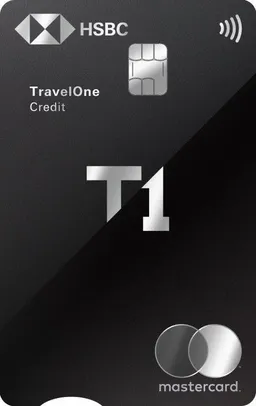
HSBC TravelOne: best all-round miles card for overseas spend
The HSBC TravelOne earns 2.4 mpd on any transaction charged in a foreign currency, with no minimum spend and no cap. Local spend earns 1.2 mpd.
Two features make it especially good for holiday trips:
- Family-friendly. Supplementary cards are free for life, so family members’ spending earns miles for you. Its complimentary travel insurance (up to S$100,000) also extends to family members travelling with you.
- Flexible redemptions. Points transfer instantly to 20 airline and hotel partners, with no conversion fees. It also comes with four airport lounge visits a year for the principal cardholder.
Keep in mind that the S$196.20 annual fee is charged from the first year, with no waiver. The minimum income is S$65,000, or S$30,000 if you have at least S$50,000 in deposits or investments with HSBC.
Best for: families and travellers who redeem with airlines beyond KrisFlyer.
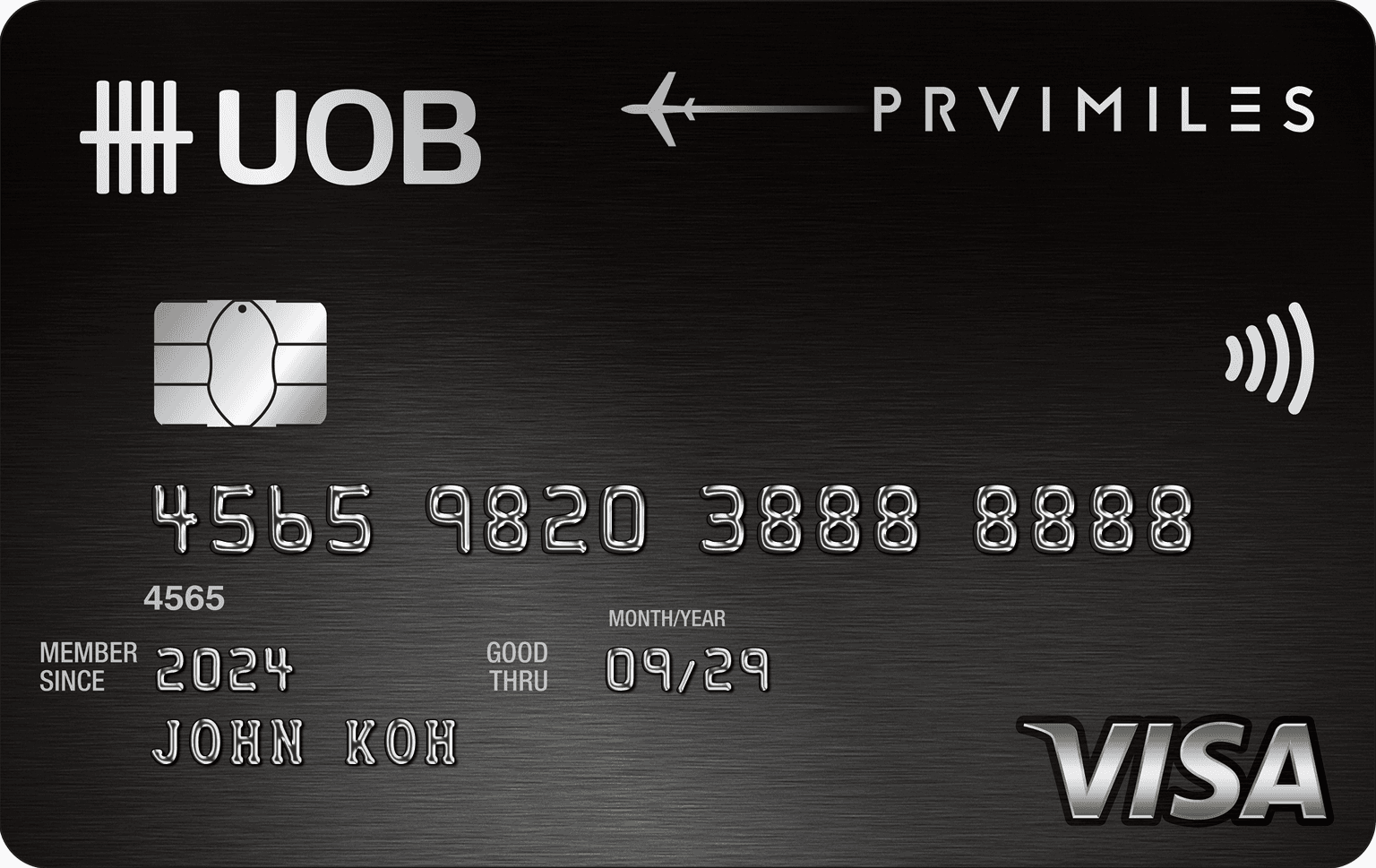
UOB PRVI Miles: best for Southeast Asia trips and hotel bookings
The UOB PRVI Miles Card earns 2.4 mpd on overseas spend, rising to 3 mpd in Malaysia, Indonesia, Thailand and Vietnam. That makes it a strong pick for regional December getaways. It also earns 1.4 mpd locally, one of the highest rates for a general miles card.
It’s especially useful while you’re still planning the trip:
- Hotels booked through the dedicated UOB PRVI Miles Agoda site earn up to 8 mpd.
- Hotels, activities and car rentals booked through the UOB x Expedia page earn up to 8 mpd, and flights booked there earn 3 mpd.
Use UOB’s dedicated links, because booking through the regular Agoda or Expedia site only earns the standard rate. There’s no minimum spend and no cap. The annual fee is S$261.60.
Best for: regional holidays, and travellers who still have hotels to book.
Other cards worth considering
- Maybank Horizon Visa Signature: an uncapped 2.8 mpd on FCY spend and air tickets, but only if you spend at least S$800 in the same calendar month. Below that, FCY spend earns 1.2 mpd. Maybank occasionally boosts the rate during peak travel periods, so check before your trip.
- DBS Altitude: 2.2 mpd on overseas spend and 1.3 mpd locally. Agoda bookings through DBS Travel & Leisure Marketplace earn 3 mpd.
- CIMB Visa Infinite: 2% cashback on travel and FCY spend with a S$2,000 monthly minimum. The cashback doesn’t cover its 3% FCY fee on overseas spend, so its value lies in its perks: no annual fee for life, up to S$1 million in complimentary travel insurance when you charge your full fare, and three lounge visits a year. Minimum income is S$120,000.
How much could you earn on a December trip?
Here’s an illustrative example for S$2,000 of foreign currency spend:
| Card | Rewards earned | FCY fee paid | Net result |
|---|---|---|---|
| HSBC TravelOne | 4,800 miles | S$65 | Worth it if you value miles above 1.35 cents |
| UOB PRVI Miles (in Thailand) | 6,000 miles | S$65 | Worth it if you value miles above 1.08 cents |
| Maybank Horizon (S$800 min. met) | 5,600 miles | S$65 | Worth it if you value miles above 1.16 cents |
| CIMB Visa Infinite (S$2,000 min. met) | S$40 cashback | S$60 | –S$20 |
If you value a mile at 1.5 cents, the HSBC TravelOne’s 4,800 miles are worth about S$72. That’s S$7 more than the S$65 fee, which is a gain but not a big one. The miles cards pull further ahead the more value you get from your redemptions.
Before You Compare
Weigh the FCY fee against your rewards
Most cards charge ~3.25%; 2.4 mpd only wins if you value a mile above ~1.35 cents.
Watch minimum spends and caps
Bonus rates like Maybank Horizon’s 2.8 mpd need S$800 spend in the month to unlock.
Always pay in the local currency
Decline DCC: paying in SGD overseas means a worse rate, a 1% fee and fewer miles.
Activate overseas use before you fly
Turn on overseas payments and ATM withdrawals in your bank app before you leave.
Apply early if you need a new card
Approval and card delivery take time, so apply well before your December departure.
Which card should you use for each part of your trip?
You don’t need to use one card for everything. A simple holiday setup could look like this:
- Booking hotels: UOB PRVI Miles through its dedicated Agoda or Expedia pages, for up to 8 mpd
- Flights: a card that earns bonus miles on air tickets and gives complimentary travel insurance when you charge your full fare. Check the insurance terms
- Spending on the ground: HSBC TravelOne or UOB PRVI Miles for miles, or Trust Freedom for zero fees
Decision Guide
Why you should never pay in SGD overseas
When you pay overseas, some merchants offer to charge you in SGD instead of the local currency. This is called Dynamic Currency Conversion (DCC), and it almost always costs you more:
- The merchant chooses the exchange rate, which is usually worse than your card network’s.
- A 1% DCC fee is added by the payment network.
- Many miles cards only pay their overseas rate on foreign currency spend. An SGD charge abroad may earn just the local rate. On the HSBC TravelOne, that’s half the miles.
If you see your bill in SGD, ask to be charged in the local currency instead. The same applies online: an overseas-registered merchant can charge a 1% fee even when you pay in SGD.
How to get your card ready before you fly
Singapore banks switch off some overseas card functions by default to protect you from fraud. Before your December trip:
- Open your bank’s app and go to card settings or card controls.
- Turn on overseas transactions, including online foreign currency purchases if listed separately.
- Enable overseas ATM withdrawals if you’ll need cash.
- Set the activation period to cover your travel dates.
- Turn on transaction alerts and save your bank’s overseas hotline number.
Frequently asked questions
What is the best credit card for overseas spending in Singapore?
For miles, HSBC TravelOne and UOB PRVI Miles both earn 2.4 mpd on foreign currency spend, and UOB PRVI Miles earns 3 mpd in Malaysia, Indonesia, Thailand and Vietnam. To avoid FCY fees, Trust Freedom charges 0%.
Which credit cards have no foreign transaction fees?
In Singapore, digital bank cards such as Trust Freedom, Mari Credit Card and GXS Credit Card charge no FCY fees. Most traditional bank cards charge around 3.25% to 3.5%.
Is it worth using a miles card overseas despite the FCY fee?
It depends on how you value miles. At 2.4 mpd and a 3.25% fee, you need to value each mile above about 1.35 cents for the card to come out ahead.
Should I pay in SGD or the local currency overseas?
Always the local currency. Paying in SGD triggers Dynamic Currency Conversion, which usually means a worse exchange rate, an extra 1% fee and, on some cards, fewer miles.
Do credit cards give free travel insurance?
Some do, usually when you charge your full travel fare to the card. Coverage limits and who’s covered vary, so check the card’s terms before relying on it.
Searching for money answers?
One tap and you’ll see SingSaver more often in Google search and AI results.
About the author

Afina Najib
Spending most of her young writer's phase working as a freelancer, Afina's written for various industries ranging from e-commerce, travel to health and finance. Her expertise lies in her ability to make complex subjects like finance easy to consume for everyday readers.
The information on this page is for educational and informational purposes only and should not be considered financial or investment advice. While we review and compare financial products to help you find the best options, we do not provide personalised recommendations or investment advisory services. Always do your own research or consult a licensed financial professional before making any financial decisions.