With 3% Stockback, Can Trust Freedom Card Help You Start an Investment Portfolio?
Updated: 24 Sept 2026
Written byAlevin K Chan
Freelance Contributor
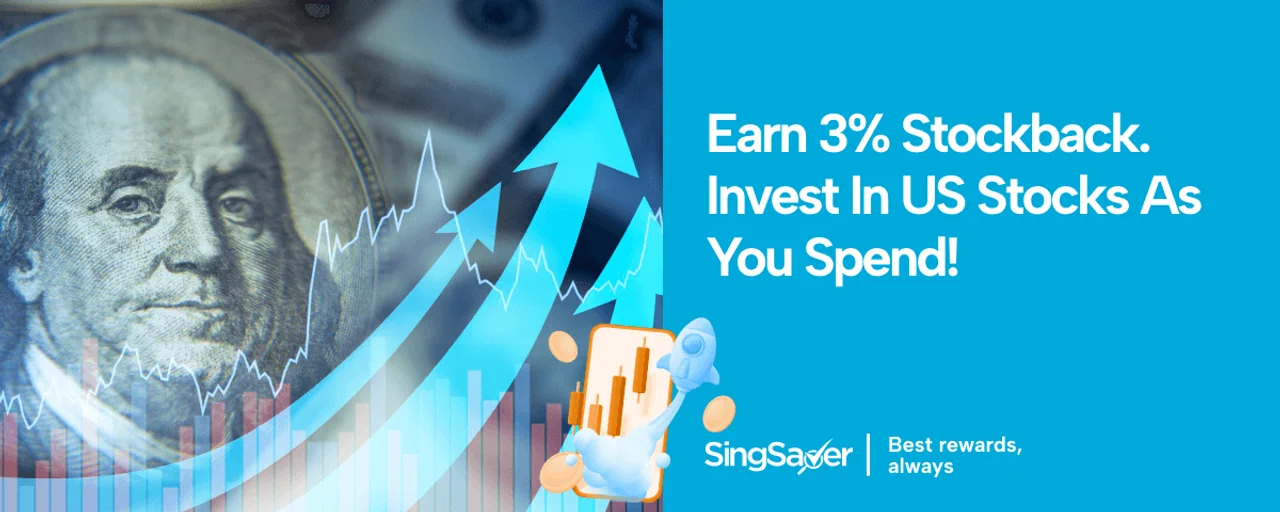
Your next dinner out or shopping trip could do more than earn you your regular rewards like cashback. It could help you own a slice of a US-listed company or shares in a popular exchange-traded fund (ETF).
That’s the idea behind Trust Freedom Card’s Stockback reward – the first credit card in Singapore to offer this reward type. This new reward option turns a percentage of your spending into investments, meaning your everyday purchases can contribute towards building your investment portfolio.
If you’ve been looking to give investing a try, perhaps drawn by the US stock market’s double digit returns in 2024 (≈25%) and 2025 (≈17%), or maybe you’ve always wanted to get a US Stock but haven’t had the time to get started – then this makes for an inviting proposition. With the Trust Freedom Card’s stockback mechanic, you can gain exposure to US stocks and ETFs without setting aside extra cash.
But how does it work, and who stands to benefit most?
Meet Trust Freedom Card: Earn 3% Stockback as you spend
Trust Freedom Card has added a brand new reward type. Instead of cashback, cardholders can choose 3% Stockback on eligible purchases locally and overseas.
Want to maintain flexibility? No problem – you can choose between Stockback, Miles or Cashback (1.5% unlimited, or up to bonus 15% on your preferred category) every quarter, according to your priorities.
Here’s how the 3% Stockback works
Each eligible transaction earns you 3% Stockback; this applies to both local and foreign purchases. When your Stockback accumulates S$10, it is automatically invested on your behalf - purchasing a fractional share of a stock or ETF of your choice, from a list of 50. Keep going and watch your investment portfolio grow over time.
The Trust App allows you to see how your daily transactions contribute to your Stockback earnings.
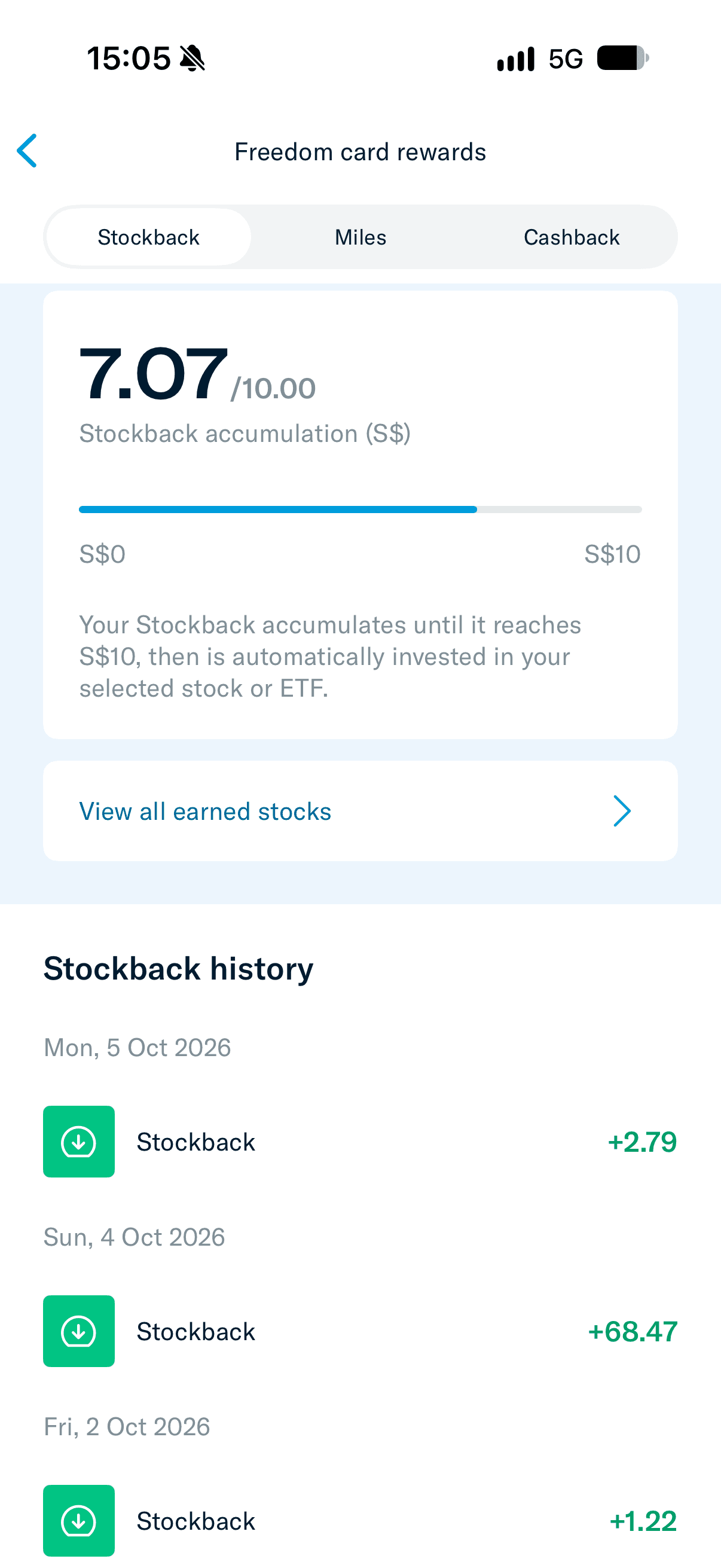
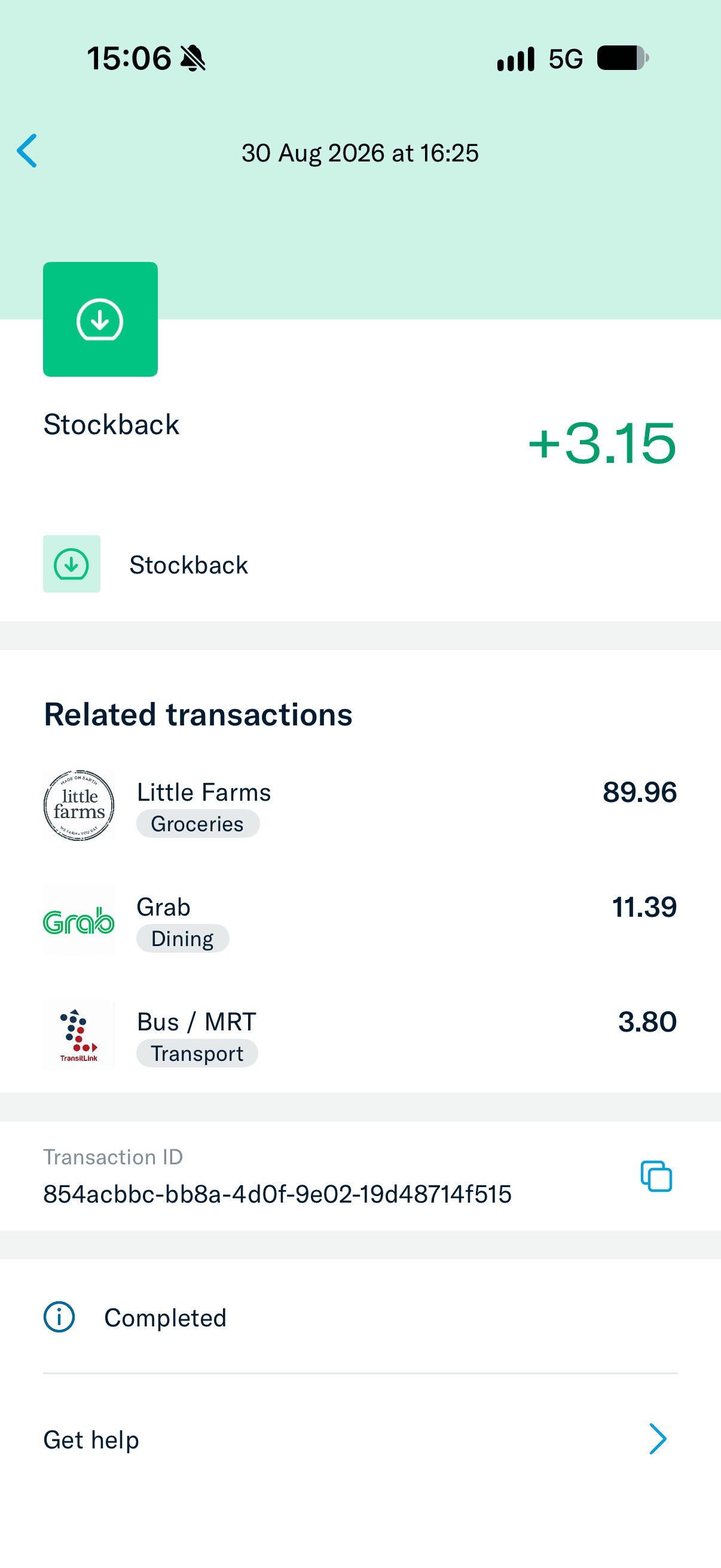
At present, there are 50 US stocks and ETFs you can choose from, including:
-
Nvidia (NVDA), Apple (AAPL), (Amazon) AMZN, Microsoft (MSFT) and other tech giants
-
Vanguard S&P 500 (VOO), Invesco QQQ Trust (QQQ), SPDR S&P 500 (SPY) and other popular broad-market ETFs
The best part is, there’s no annual card fee for using Trust Freedom Card, no foreign transaction fees, and your Stockback is invested at no additional cost to you. Those who wish to sell can also enjoy zero commission fee till 31 Dec 2026.
Furthermore, Stockback reward is capped at S$500 per quarter which means you could add up to S$2,000 to your investment portfolio with four consecutive quarters of Stockback – just by spending on your everyday things like shopping and dining!
A rewarding option for your year-end plans
Here’s another reason why we’re excited for the Trust Freedom Card’s Stockback reward. With a cashback cap of S$500 per quarter, that works out to a monthly spend cap of S$5,555, leaving substantial room for planned purchases.
As the final quarter of the year approaches – a season for increased spending – this means transactions from year-end spends like holidays, gifts and dining can all contribute to your selected investments via Stockback rewards.
And let’s not forget that till 31 December 2026, the 3% Stockback applies to both local and foreign transactions, making this a prime opportunity to build your portfolio. Plus, you can change to a different stock or ETF at any time for your next Stockback investment, giving you the flexibility to fine-tune your portfolio over time.
As always, do check which transactions qualify. Exclusions include insurance premiums, account top-ups and certain payments such as utilities and education fees.
Start earning 3% Stockback today!
Who is Trust Freedom Card’s Stockback for?
Stockback creates a bridge between spending and investing, but its appeal will depend on what you want your rewards to do. Here’s how the Trust Freedom Card’s Stockback reward could work for these three types of users.
Investors who already trade and spend
If you already invest, Stockback offers a seamless way to supplement your portfolio using your everyday spending.
You make your investment selection, and the stock or ETF portfolio grows automatically as your stockback accumulates in blocks of S$10. It’s a relatively hands-off addition to your existing investing routine, with no need to make a separate funding decision each time.
For investors, think of stockback as an extra contribution alongside your planned investments. If you’re already spending, why not?
People who want their credit card rewards to work harder
Perhaps you like the idea of using credit card rewards for something beyond your next purchase. Well, Stockback gives those rewards the potential to grow through investing.
Instead of using the reward immediately, you acquire an asset you can continue holding. If its value rises, your reward could eventually be worth more than its original amount. (The reverse is also possible, depending on market conditions).
In any case, if you’re looking for rewards that have the potential to grow in value over time, Stockback might just be your ideal credit card reward.
People who’ve wanted to invest but haven’t taken the plunge
Making your first investment can feel like a bigger commitment than it needs to be, keeping you trapped in a cycle of wanting to start, but postponing taking that important first-step.
Trust Freedom Card’s Stockback reward removes that friction. Simply choose your stock or ETF, and sit back. Your card rewards fund the purchases of your investment, allowing you to experience owning an investment and observing its performance without the stress of allocating extra cash upfront.
Ultimately, Stockback is best suited to cardholders who are comfortable investing their rewards and accepting fluctuations in value. If you’d rather use rewards to offset spending, cashback may fit better. Whichever you choose, always keep purchases within your budget and pay your card bill in full to avoid interest eroding the benefit.
Trust Freedom Card - Invest as you spend
For someone who wants to begin investing, this is probably a great starting point especially if you’re already spending with your credit card. Just spend as you normally do and leave the rest to Trust. Your Stockback will be automatically invested in fractional shares – making investing a lot more accessible for you – and this could be the tipping point that you may need.
On the flipside, it’s important to recognise the limitations involved. The maximum contribution amount via this channel is S$2,000 per year – this may not be sufficient for you to fully meet your overall financial goals. There’s also the issue of sufficient diversification if you stick with just a few stocks, although this is somewhat alleviated with an ETF.
But nonetheless, if you’re new to investing or simply want to complement your current strategy, this hands-off approach to building your portfolio is a no-brainer.
Win up to US$8,000 in stocks
Thinking of giving the Trust Freedom Card a go? Don’t miss this exclusive sign-up promo.
-
Receive a sure-win gift worth up to US$8,000 in US stocks
-
Sign up by 31 October 2026 to qualify
-
Only for New-to-Trust credit card users who choose Stockback as reward
Don’t miss this exclusive sign-up promo
- One credit card, multiple ways to earn. You choose: 3% Stockback, 1.3 miles per dollar, up to 1.5% unlimited cashback or up to 15% bonus cashback. See Trust Freedom Card Key Facts Sheet for more details.
- From 21 Sept 2026, sign up, select miles and spend to earn up to 100K Max Miles. T&Cs apply*
- From 13 Aug 2026, stand to win up to 8K USD stocks. T&Cs apply*
- Switch your rewards every quarter
- Enjoy 0% foreign transaction fees
- $0 annual fee
- $0 commission fee for selling stocks
Disclaimers
Stockback value is capped at S$500 per quarter. 3% Stockback in US Stocks and ETFs on both Local and Foreign Eligible Spend promo is until 31 Dec 2026, and will change to 2% Stockback on Local Eligible Spend and 0.5% Stockback on Foreign Eligible Spend from 1 Jan 2027. T&Cs apply. Visit trustbank.sg for more info.
Any mention or illustration of Stocks or ETFs is for information only and is not an offer or recommendation. This article is for informational purposes and should not be considered financial or investment advice. All investments involve risks, including the risk of losing all of the invested amount. Overseas investments carry additional financial, regulatory and legal risks.
About the author
Alevin K Chan
Alevin loves helping people make good money decisions. He briefly flirted with being a Financial Advisor, but quickly realised writing about personal finance is the better way to go.