
Home Loans in Singapore (2026): Best Mortgage Rates To Consider
Updated: 13 Apr 2026
Looking to buy a new home or exploring options for your mortgage in 2026? Here’s everything you need to know about the best home loan rates in Singapore right now.

Written bySingSaver Team
Team
The information on this page is for educational and informational purposes only and should not be considered financial or investment advice. While we review and compare financial products to help you find the best options, we do not provide personalised recommendations or investment advisory services. Always do your own research or consult a licensed financial professional before making any financial decisions.

Why Trust SingSaver
Whether you're buying your first flat or refinancing your condo, choosing the right home loan can save you thousands in interest payments.
With property prices continuing to climb and interest rates stabilising after a few volatile years, securing the best home loan has never been more important. From private properties to HDB flats, and whether you're a first-time buyer or seasoned homeowner, comparing mortgage packages across banks is key to making the most of your financing options. In this guide, we break down how home loans work, the differences between fixed and floating rates, and showcase the best mortgage rates available in Singapore right now.
How does a home loan work?
A home loan is a long-term loan provided by a bank or financial institution to help you finance the purchase of a property. You borrow a portion of the property's value and repay it in monthly instalments that cover both the principal (loan amount) and interest. Loan tenures typically range from 5 to 30 years.
Home loans come in two broad types: fixed-rate and floating-rate. The key difference lies in how the interest rate is structured. You'll also need to factor in lock-in periods, early repayment penalties, and whether the loan allows partial repayments without extra charges.
What's the difference between a home loan, housing loan, and mortgage?
Home loans for private vs public housing
The type of property you’re buying determines the type of home loan you’re eligible for. If you’re buying an HDB flat, you can choose between an HDB concessionary loan or a bank loan. If you’re buying a private property, your only option is a bank loan.
The rules for loan amounts, downpayments, and eligibility differ between the two. Bank loans also apply to properties under construction (BUC) and refinancing packages.
*Please note that the rates provided below are indicative and subject to change. It's advisable to consult with the respective banks or financial institutions for the most current rates and terms.
Private property
If you're buying a resale condo or landed property, your loan eligibility and approval are closely tied to the property's valuation and your personal finances. Most buyers go for bank loans, as HDB loans are not applicable for private property.
Key considerations include:
-
A downpayment of at least 25% (of which 5% must be in cash)
-
Total Debt Servicing Ratio (TDSR), which limits your total monthly debt obligations to 55% of your gross monthly income
-
The condition and age of the property, which may affect loan tenure and valuation
Loan disbursement typically happens around the completion date, and you’ll need to factor in stamp duties, legal fees, and possible renovation costs.
HDB
If you’re buying a BTO flat, resale HDB, or Executive Condominium from HDB, you generally have more loan options and lower upfront costs compared to private property buyers.
You can choose between an HDB concessionary loan or a bank loan, provided you meet the eligibility criteria. HDB concessionary loans offer more stability, with interest rates pegged at 0.1% above the CPF Ordinary Account rate, making them easier to budget for. Bank loans, on the other hand, may offer lower interest rates initially but come with market-linked fluctuations and lock-in periods.
Loan disbursement for HDB flats is typically staged, especially for BTO projects, and buyers should also budget for stamp duties, legal fees, and renovation costs separately.
Best fixed mortgage rates for a resale condo or landed home
|
Bank |
Lock-in Period |
Interest rate Year 1) |
Year 2 |
Year 3 |
Year 4 |
Year 5 |
Minimum loan |
|
OCBC |
3 Years |
1.45% |
1.45% |
1.45% |
2.178% |
2.178% |
S$2,000,000 |
|
SCB |
2 Years |
1.45%
|
1.45%
|
1.578% |
1.728% |
2.178% |
S$1,200,000 |
|
BOC |
3 years |
1.50% |
1.50% |
1.50% |
2.178% |
2.178% |
S$500,000 |
|
CMB |
2 Years |
1.50% |
1.50% |
1.878% |
2.178% |
2.178% |
S$500,000 |
|
DBS |
2 Years |
1.55% |
1.55% |
2.178% |
2.178% |
2.178% |
S$700,000 |
Best floating mortgage rates for a resale condo or landed home
|
Bank |
Lock-in Period |
Interest rate Year 1) |
Year 2 |
Year 3 |
Year 4 |
Year 5 |
Minimum loan |
|
DBS |
2 Years |
1.650% |
1.650% |
1.750% |
2.000% |
2.000% |
S$500,000 |
|
HLF |
2 Years |
2.380%
|
2.380%
|
3.500% |
3.500% |
3.500% |
S$300,000 |
Refinancing
Refinancing involves switching your existing home loan to a different bank to secure a better rate or more favourable terms. Most people consider this once their lock-in period ends — typically after 2 to 3 years.
When refinancing:
-
Check for hidden costs like legal fees and valuation charges, though many banks offer subsidies to offset these
-
Compare the 3-year average rate, not just Year 1
-
Be aware of your remaining loan tenure and outstanding amount, as this affects your options
Refinancing can result in significant savings, especially if you switch from a high-rate legacy loan to a lower SORA-pegged floating package.

SingSaver Personal Loan Cashback Offer
Enjoy one of the lowest interest rates from 0.90% p.a. (EIR from 1.75% p.a.) and up to S$6,500 in cashback when you apply for a personal loan via SingSaver. Valid till 30 September 2026. T&Cs apply.
BUC (Building Under Construction)
A BUC loan is used for properties that are still under development — common for new launches. These loans differ from resale ones in that they’re disbursed progressively as the developer completes each phase of construction.
For BUC loans:
-
Most packages are floating-rate, pegged to SORA
-
You only pay interest during the construction phase (also called interest-only servicing)
-
Legal fees and upfront costs may be slightly lower, but you’ll still need to pay stamp duties early on
Choose a BUC loan package with care. It should ideally offer flexibility to refinance after TOP (Temporary Occupation Permit), when more loan packages become available.
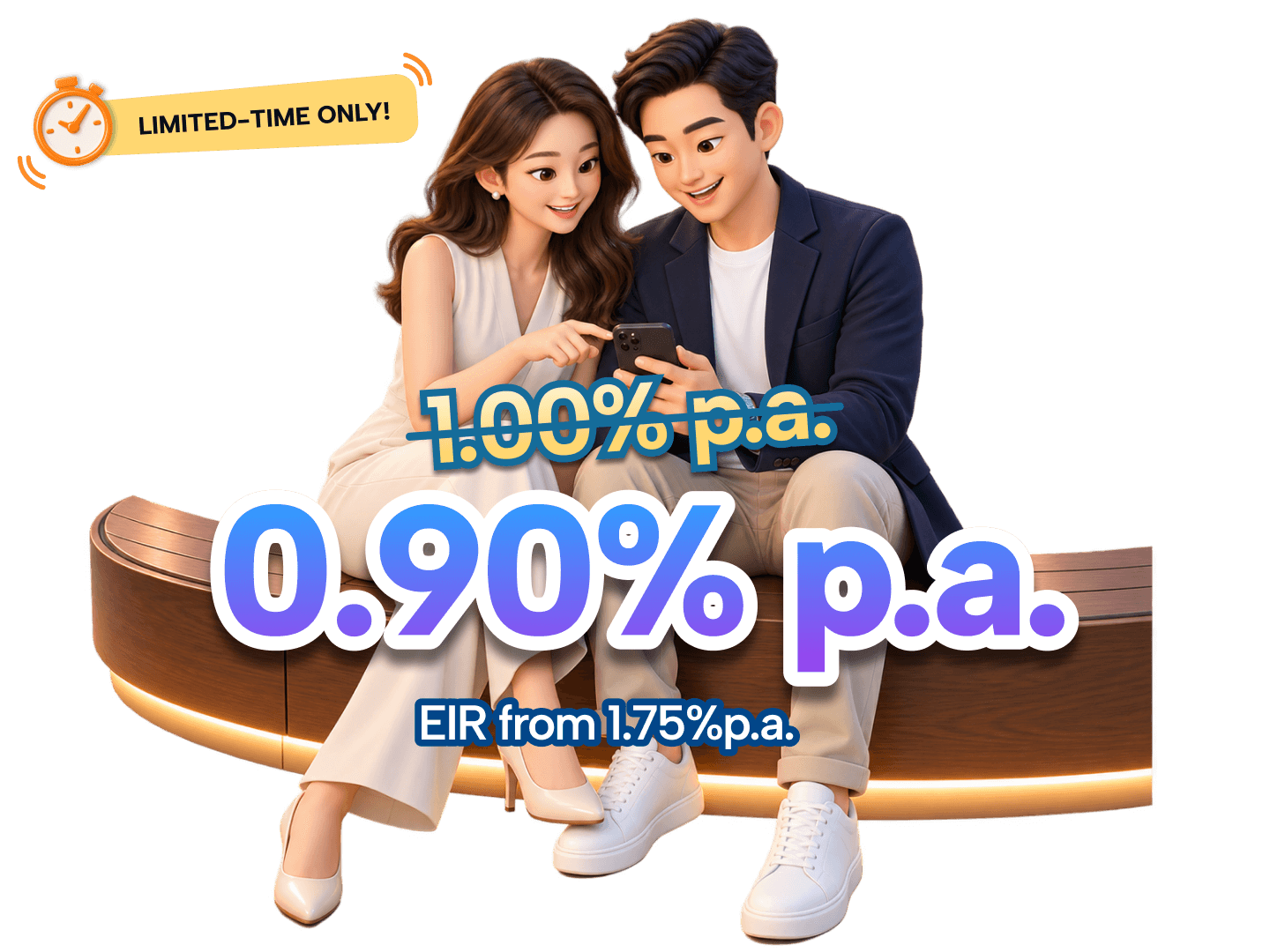
⚡SingSaver x SCB CashOne Personal Loan Flash Deal⚡
Enjoy one of the market's lowest interest rates starting from 0.90% p.a. (EIR from 1.75%) plus up to S$5,825 in Cashback when you apply for Standard Chartered CashOne Personal Loan via SingSaver. Valid till 30 September 2026. T&Cs apply.
Best BUC home loan rates
|
Bank |
Lock-in Period |
Interest rate Year 1) |
Year 2 |
Year 3 |
Year 4 |
Year 5 |
Minimum loan |
|
OCBC |
None |
1.457% |
1.457% |
1.457% |
1.457% |
1.777% |
S$300,000 |
|
SCB |
None |
1.478%
|
1.528%
|
1.528% |
1.778% |
1.778% |
S$1,500,000 |
|
RHB |
None |
1.577% |
1.577% |
1.577% |
1.577% |
2.177% |
S$500,000 |
|
CITI |
None |
1.828% |
1.828% |
1.828% |
1.828% |
2.178% |
S$750,000 |
HDB
For HDB flats, you have two main financing options: the HDB Concessionary Loan or a bank loan. HDB loans offer a fixed 2.6% rate and more lenient downpayment rules, but bank loans can be cheaper when interest rates are low.
You'll need to decide:
-
Whether you qualify for an HDB loan (e.g. income ceiling of S$14,000 for families)
-
How much CPF savings vs. cash you’re comfortable using
-
Which route gives you more flexibility if you plan to upgrade or refinance later
>> More: How do HDB home loans work?
Resale
When purchasing a resale HDB flat, buyers can choose between an HDB loan and a bank loan. HDB loans are often preferred by first-time buyers due to their smaller upfront cash requirement (as little as 5%) and higher loan-to-value limit of 80%.
For bank loans:
-
A 25% downpayment is required, of which 5% must be in cash
-
Legal and valuation fees apply
-
You can use CPF to cover monthly repayments
-
Keep in mind that HDB resale buyers also have to budget for the Cash Over Valuation (COV), which cannot be paid using CPF or loan proceeds
-
Best fixed mortgage rates for a resale HDB flat
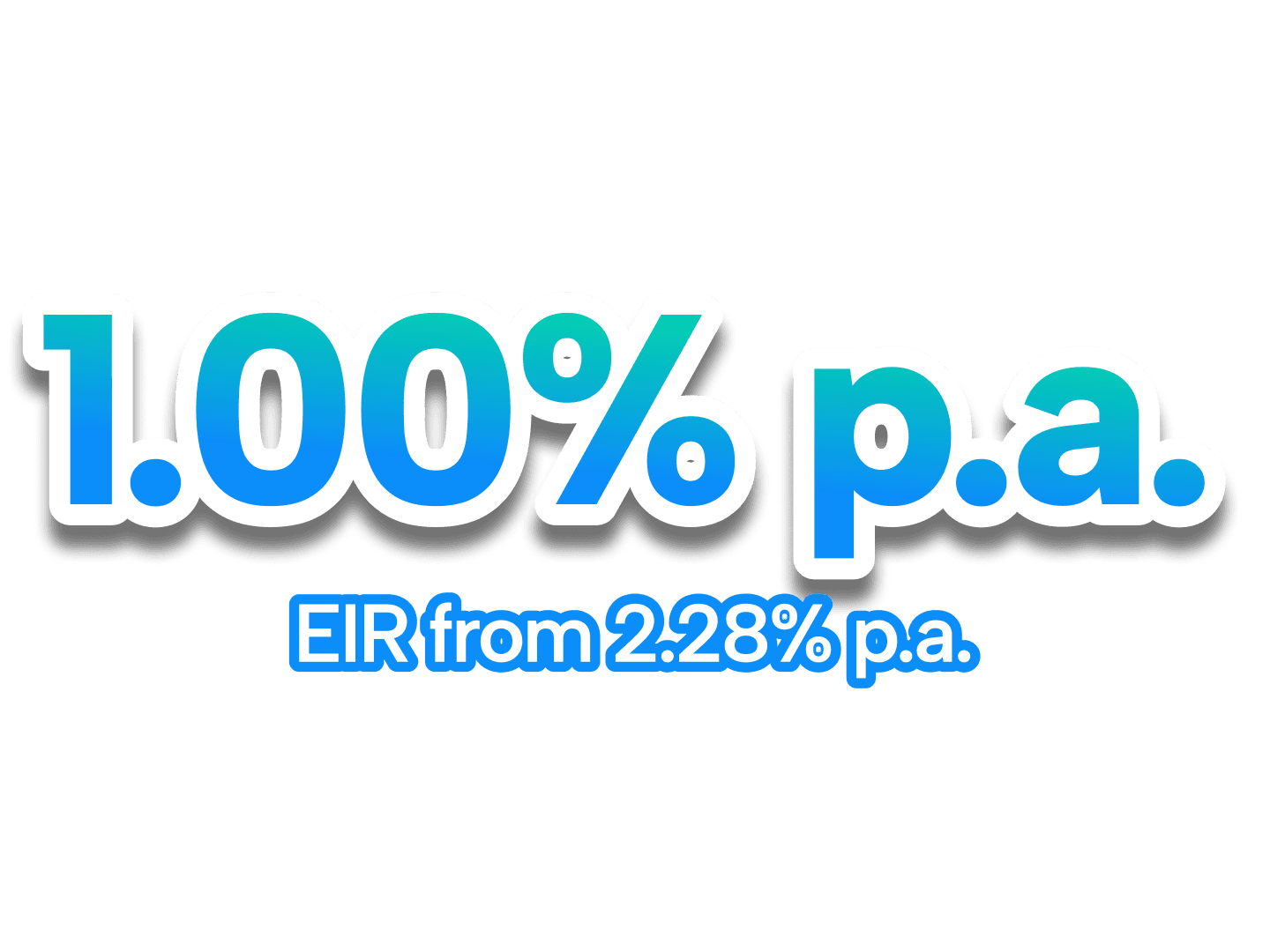
⚡SingSaver x Trust Personal Loan Flash Deal⚡
Enjoy low interest rates from 1.00% p.a. (EIR 2.28% p.a.) plus up to S$1,750 in cashback and rewards when you sign up for Trust Bank Personal Loan via SingSaver. Plus, receive a S$10 FairPrice E-Vouchers from Trust when you sign up with the referral code SINGSAVE. Valid till 30 September 2026. T&Cs apply.
Best fixed mortgage rates for a resale HDB flat
|
Bank |
Lock-in Period |
Interest rate Year 1) |
Year 2 |
Year 3 |
Year 4 |
Year 5 |
Minimum loan |
|
DBS |
5 Years |
1.850% |
1.850% |
1.850% |
1.850% |
1.850% |
S$200,000 |
|
HLF |
2 Years |
2.600% |
2.600% |
4.250% |
4.250% |
4.250% |
S$200,000 |
Best floating mortgage rates for a resale HDB flat
|
Bank |
Lock-in Period |
Interest rate Year 1) |
Year 2 |
Year 3 |
Year 4 |
Year 5 |
Minimum loan |
|
SCB |
2 Years |
1.428% |
1.428% |
1.578% |
1.778% |
1.778% |
S$120,000 |
|
OCBC |
2 Years |
1.477% |
1.477% |
1.927% |
1.927% |
1.927% |
S$100,000 |
|
RHB |
2 Years |
1.527% |
1.527% |
2.177% |
2.177% |
2.177% |
S$500,000 |
|
DBS |
2 Years |
1.528% |
1.528% |
1.628% |
1.778% |
1.928% |
S$500,000 |
|
MB |
2 Years |
1.878% |
1.878% |
1.878% |
2.178% |
2.178% |
S$100,000 |
Refinancing
If you’re currently on an HDB loan, switching to a bank loan through refinancing could lower your monthly repayments. However, once you refinance to a bank loan, you can’t switch back to an HDB loan in the future.
Important points to consider:
-
You’ll need to meet TDSR and credit requirements, just like private loan borrowers
-
There is no lock-in period with HDB loans, so you can refinance anytime
-
Legal and valuation fees apply, but banks often offer subsidies for refinancing
It’s especially worthwhile to refinance if current bank rates are 0.5% to 1% lower than the HDB concessionary rate.
Fixed vs floating home loans
A fixed-rate loan offers the certainty of a locked-in interest rate for a set period (typically 2 to 5 years), after which it reverts to a floating rate. This is great for those who value stability and predictability in repayments.
Floating-rate loans, on the other hand, are pegged to market benchmarks like SORA. Your interest rate – and monthly repayment – can change every month or quarter. These are suitable for borrowers who can tolerate some fluctuation in exchange for potentially lower rates.
What is SORA?
SORA, or the Singapore Overnight Rate Average, is the benchmark used for most floating-rate home loans in Singapore today. Replacing SIBOR, SORA reflects the volume-weighted average rate of overnight borrowing transactions in Singapore’s financial markets. Most floating home loans are structured as 3M SORA + spread. For example, if 3M SORA is 2.5% and your bank’s spread is 0.8%, your interest rate becomes 3.3%.
You might consider a SORA-pegged floating loan if you’re comfortable with rate fluctuations and want to benefit from potentially lower interest rates in the future. However, if you prefer stability and predictable monthly payments — especially during times of interest rate volatility — a fixed-rate loan may suit you better.
>> More: What is a SORA-based home loan and how does it work?
Eligibility
To qualify for a home loan, banks assess factors such as:
-
Age (usually between 21 and 65)
-
Citizenship or PR status
-
Income level and employment stability
-
Credit score and existing debt
-
Loan-to-Value (LTV) ratio: up to 75% for bank loans
-
Total Debt Servicing Ratio (TDSR): must not exceed 55% of gross monthly income
-
For HDB loans, there are additional criteria:
-
Monthly household income cap (S$14,000 for families)
-
Must not own private property
-
Must not have taken more than 2 previous HDB loans
HDB
For HDB flats, you have two main financing options: the HDB Concessionary Loan or a bank loan. HDB loans offer a fixed 2.6% rate and more lenient downpayment rules, but bank loans can be cheaper when interest rates are low.
You'll need to decide:
-
Whether you qualify for an HDB loan (e.g. income ceiling of S$14,000 for families)
-
How much CPF savings vs. cash you’re comfortable using
-
Which route gives you more flexibility if you plan to upgrade or refinance later
Resale
When purchasing a resale HDB flat, buyers can choose between an HDB loan and a bank loan. HDB loans are often preferred by first-time buyers due to their smaller upfront cash requirement (as little as 5%) and higher loan-to-value limit of 80%.
For bank loans:
-
A 25% downpayment is required, of which 5% must be in cash
-
Legal and valuation fees apply
-
You can use CPF to cover monthly repayments
Keep in mind that HDB resale buyers also have to budget for the Cash Over Valuation (COV), which cannot be paid using CPF or loan proceeds.
Best fixed mortgage rates for a resale HDB flat
|
Bank |
Interest Rate (Year 1–2) |
Lock-in Period |
Notes |
|
DBS |
2.38% |
2 years |
Standard fixed-rate package |
|
HSBC |
2.30% |
2 years |
Standard fixed-rate package |
|
Maybank |
2.30% |
1 + 1 Year Fixed |
Requires minimum deposit of S$30,000 |
|
OCBC |
2.38% |
2 years |
Standard fixed-rate package |
Best floating mortgage rates for a resale HDB flat
|
Bank |
Interest Rate (Year 1) |
Peg |
Lock-in Period |
Notes |
|
DBS |
3.95% |
FHR6 |
2 years |
Standard floating-rate package |
|
OCBC |
3M SORA + 4.30% |
3M SORA |
2 years |
Includes Eco-Care Home Loan option |
|
HSBC |
1M SORA + 4.20% |
1M SORA |
2 years |
Standard floating-rate package |
|
Maybank |
3M SORA + 4.15% |
3M SORA |
2 years |
Standard floating-rate package |
Refinancing
If you’re currently on an HDB loan, switching to a bank loan through refinancing could lower your monthly repayments. However, once you refinance to a bank loan, you can’t switch back to an HDB loan in the future.
Important points to consider:
-
You’ll need to meet TDSR and credit requirements, just like private loan borrowers
-
There is no lock-in period with HDB loans, so you can refinance anytime
-
Legal and valuation fees apply, but banks often offer subsidies for refinancing
It’s especially worthwhile to refinance if current bank rates are 0.5% to 1% lower than the HDB concessionary rate.
Best floating mortgage rates for HDB loan refinancing
|
Bank |
Interest Rate (Year 1) |
Peg |
Lock-in Period |
Notes |
|
DBS |
3.95% |
FHR6 |
2 years |
Standard floating-rate package |
|
OCBC |
3M SORA + 4.30% |
3M SORA |
2 years |
Standard floating-rate package |
|
HSBC |
1M SORA + 4.20% |
1M SORA |
2 years |
Standard floating-rate package |
|
Maybank |
3M SORA + 4.15% |
3M SORA |
2 years |
Standard floating-rate package |
Best fixed mortgage rates for HDB refinancing
|
Bank |
Interest Rate (Year 1–2) |
Lock-in Period |
Notes |
|
BOC |
2.30% |
1 + 1 Year Fixed |
Standard fixed-rate package |
|
DBS |
2.38% |
2 years |
Standard fixed-rate package |
|
OCBC |
2.38% |
2 years |
Standard fixed-rate package |
|
Maybank |
2.30% |
1 + 1 Year Fixed |
Requires minimum deposit of S$30,000 |
Looking for personal loans ?



SingSaver x DBS/POSB Personal Loan Exclusive Offer
Enjoy interest rates from 1.48% p.a. (EIR from 3.22% p.a*) when you apply for a DBS/POSB Personal Loan. Plus, get S$900 bonus cash on top of up to 3% cashback when you apply for a loan min. S$10,000 with a min. tenure of 3 years. Use the promo code (SINGSAVER) upon application. Valid till 30 September 2026. T&Cs apply.
How to choose the best home loan
Here are some practical tips to help you evaluate and choose the mortgage that best suits your needs.
-
Compare interest rates over a 3-year average, not just Year 1 teaser rates.
Many banks advertise attractive Year 1 rates to lure borrowers, but these often jump in subsequent years. Always look at the average effective rate over the first 2 to 3 years — this gives you a more realistic picture of your repayment costs.
-
Check the lock-in period and early repayment penalties.
Some home loans come with lock-in periods (typically 1 to 3 years) during which you may face penalties for refinancing or full repayment. If you think you might sell or refinance soon, consider loans with shorter lock-in periods or no lock-in at all.
-
Consider how long you plan to keep the property.
If you plan to stay long-term, a fixed-rate loan could offer peace of mind through stable monthly repayments. On the other hand, if you're planning to upgrade, downsize, or sell in a few years, a floating-rate loan might offer more flexibility and potential savings.
-
Use mortgage calculators or speak to a broker to simulate your monthly repayment.
Online calculators let you test different scenarios — fixed vs floating, different loan tenures, and interest rates — to see how they affect your monthly cash flow. Alternatively, a mortgage broker can give you a clearer view of the options that suit your financial profile.
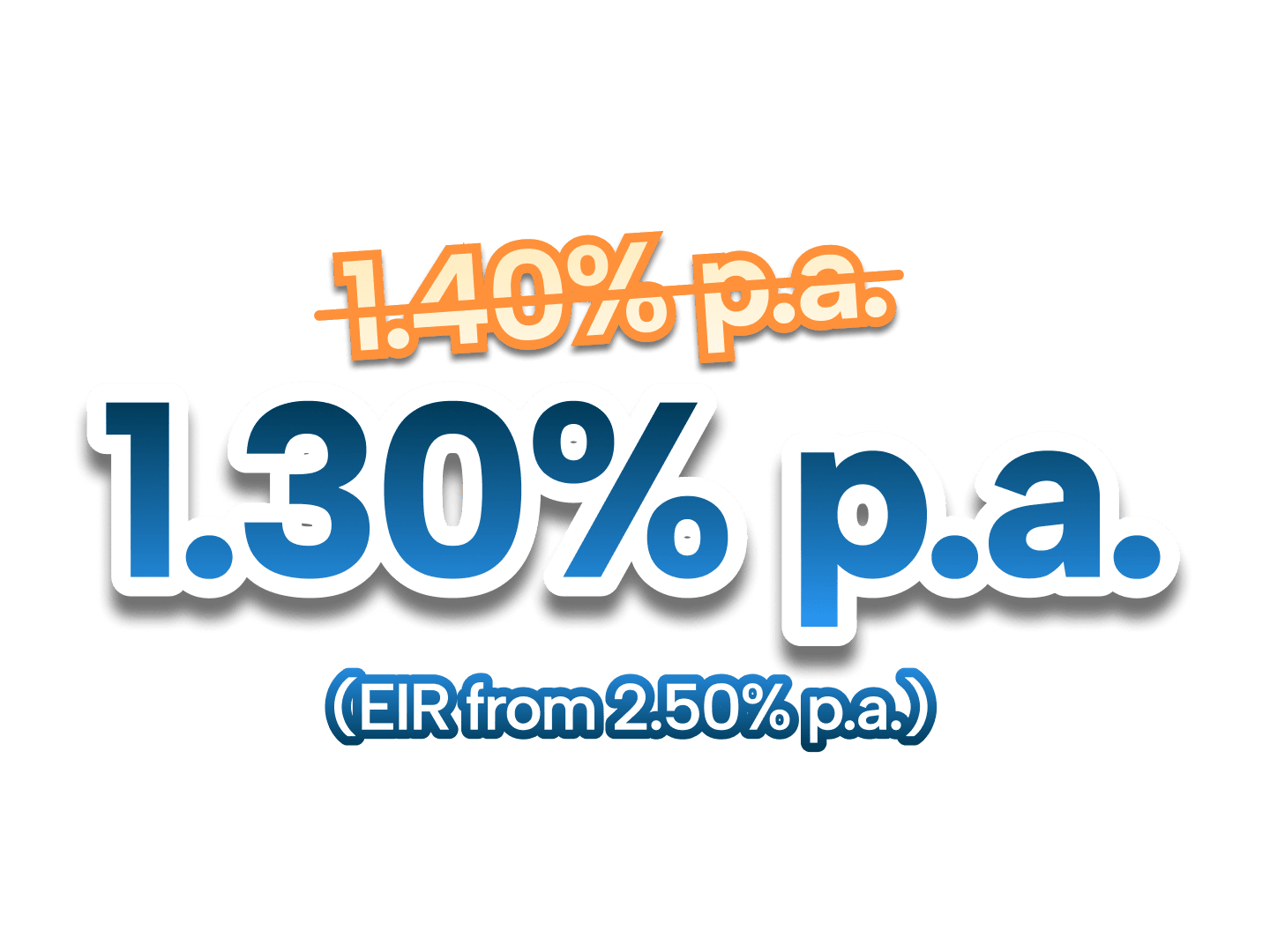
SingSaver x HSBC Personal Loan Exclusive Offer
Enjoy attractive interest rates from 1.30% p.a. (EIR from 2.50% p.a.) when you apply for HSBC Personal Loan via SingSaver. Available to new and existing customers! Valid till 30 September 2026. T&Cs apply.
How to apply for a home loan
Applying for a home loan typically involves:
-
Getting an In-Principle Approval (IPA): This gives you a loan amount estimate from the bank.
-
Securing the Option to Purchase (OTP): Once you find a property.
-
Submitting your home loan application: Include documents like payslips, CPF contribution history, and Notice of Assessment.
-
Receiving the Letter of Offer: Review terms, lock-in period, and legal fees.
-
Legal Process: Appoint a lawyer to handle conveyancing.
Many banks now support MyInfo-based applications, making the process faster and paperless.

Can’t tell your OTP from your LO?
Make sense of the acronyms as we walk you through the home loan application with our step-by-step guide
Frequently asked questions about best home loans and mortgage rates
Yes, you can refinance from an HDB loan to a bank loan. But once you switch, you can’t go back to an HDB loan.
There’s no fixed amount, but your income must be high enough to meet the TDSR limit (55% of monthly income).
If rates are expected to stay stable or fall, a floating loan could be cheaper. If you want repayment certainty, go for a fixed package.
You may have to pay a penalty (often 1.5% of the loan amount). Check the loan terms carefully.
Yes, foreigners can apply, but approval depends on income, credit profile, and the bank’s risk appetite. They may also face lower LTV limits.
Relevant articles
About the author

SingSaver Team
At SingSaver, we make personal finance accessible with easy to understand personal finance reads, tools and money hacks that simplify all of life’s financial decisions for you.